
Warning: Undefined array key "post_type" in /home/jainsoftware/public_html/wp-content/plugins/bravepopup-pro/lib/render.php on line 316

Warning: Undefined array key "post_type" in /home/jainsoftware/public_html/wp-content/plugins/bravepopup-pro/lib/render.php on line 316
 

March 2018

ARCTIC APPLE

The Science Behind Non-Browning Apples — A Biotech Marvel

By Author – Ashish Kasture

We’ve all heard the saying, “An apple a day keeps the doctor away.” But now, thanks to biotechnology, you can have that apple with even more ease — without worrying about it turning brown after slicing.

Why Do Apples Float and Turn Brown?

Ever wondered why apples float on water? It’s because they contain about 25% air, making them less dense than water. Interestingly, apples also contain antioxidants and oxygen, which, when exposed to air, undergo a process called oxidation, leading to browning.

But modern biotechnology has given us a solution — non-browning apples.


Meet the Arctic Apple

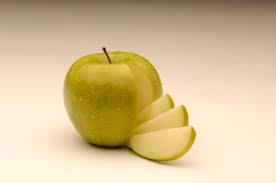
The Arctic Apple is the world’s first genetically engineered apple approved for commercial sale. These trademarked apples maintain their original color even after being sliced, bitten, or bruised — all thanks to biotechnology and genetic engineering.

Developed by Okanagan Specialty Fruits, the innovation relies on gene silencing to reduce the expression of polyphenol oxidase (PPO) — the enzyme responsible for browning.


How Genetic Engineering Made It Possible

The Arctic Apple was created using a powerful biotech tool called RNA interference (RNAi).
This method silences PPO gene expression to less than 10% of normal levels, without affecting other traits of the apple.

Here’s how it works:

  • A transgene containing PPO-controlling sequences is introduced into the apple’s DNA.

  • Promoter and terminator genes ensure proper gene function.

  • A marker gene produces a protein (NPTII) that makes the plant resistant to antibiotics like kanamycin — confirming successful genetic transformation.

The result? Apples that stay fresh and white long after being cut, making them more convenient and visually appealing.


Convenience Meets Innovation

Arctic Apples are not “slow-browning” or “low-browning” — they’re non-browning.
By silencing the enzyme that causes browning, popular varieties like Golden Delicious and Granny Smith have been enhanced with what’s called the Arctic Advantage.

This breakthrough comes from the vision of Neal Carter, founder of Okanagan Specialty Fruits in 1996. Observing the decline in apple consumption alongside rising obesity rates, he aimed to make apples more accessible, convenient, and appealing.


Tackling Food Waste

Did you know that around 40% of all apples grown are wasted — mostly due to browning?
Non-browning apples significantly reduce food waste, as consumers are more likely to eat apples that look fresh and appetizing.

For busy lifestyles, pre-sliced Arctic Apples are ideal grab-and-go snacks. Traditional sliced apples require anti-browning treatments that can alter taste and add cost — but Arctic Apples stay naturally white and crisp.


Understanding Browning in Apples

There are two types of browning in apples:

  1. Primary (Enzymatic) Browning – caused by oxidation when cells are damaged, allowing PPO to react with phenolic compounds.

  2. Secondary Browning – occurs as the apple decomposes due to bacteria or fungi.

The severity of enzymatic browning varies among apple varieties depending on:

  • Levels of malic or citric acids (which slow reactions)

  • Amount of phenolic compounds

  • Cell wall strength

  • Natural PPO enzyme levels

Even slow-browning varieties still oxidize over time — but Arctic Apples do not, because their PPO enzyme activity is nearly eliminated.


The Future of Fruit

Arctic Apples mark a major milestone in agricultural biotechnology. They’re healthy, tasty, and help combat food waste, while supporting modern consumer needs for convenience and nutrition.

With Arctic Apples, enjoying a crisp, fresh, and beautiful apple has never been easier — no lemon juice, no preservatives, no rush. Just pure apple goodness, anytime.
GEAR DE-BURRING MACHINE

Gear deburring is a process that has changed substantially over the past 10 years. There have been advancements in the types of tools used for deburring operations and the development of “wet” machines, automatic load and unload, automatic part transfer and turnover, and vision systems for part identification, etc.

Three types of tools are used in the gear deburring process, including grinding wheels, brushes, and carbide tools. A discussion of each method is as follows.

Grinding Wheels
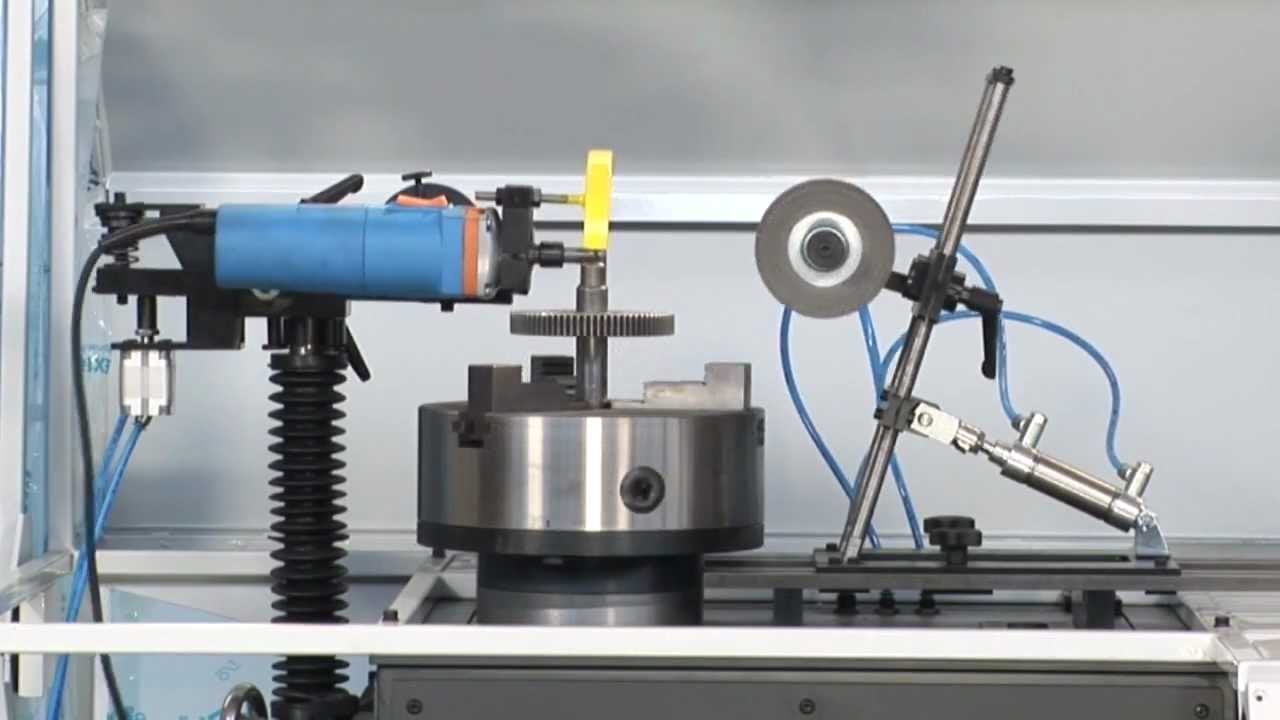
There are many wheel grits available, from 320 grit for small burrs and light chamfers, to 57 grit for large burrs and heavy chamfers, with numerous grit sizes in between. Grinding wheels will usually provide the required cosmetic appearance for a deburred gear. Setting up the grinding wheel is critical for good wheel life and consistent chamfers. The point of contact for the grinding wheel should be equal to the approach angle of the grinding head. For example, set a 45 approach angle for the grinding head with a protractor. Next, draw a line through the center of the grinding wheel followed by a line drawn 45 to the first line. The contact point between the gear and the grinding wheel should be at the 45 line.

The size of the chamfer attainable is determined by the size of the burr to be removed from the part. Further, three additional factors that affect chamfer size are wheel grit size, the speed of the work spindle, and the amount of pressure applied to the part by the grinding wheel. Grinding wheel speed is noted on the grinding wheel, and it is usually 15,000 to 18,000 RPM. The grinding wheels used most often are aluminum oxide.

Brushes
Parts with small burrs can be effectively deburred with a brush. Two types of brushes are used for deburring operations, those being wire and nylon. Wire brushes are made with straight, crimped, or knotted bristles. The wire diameter and length will determine how aggressively the brush will deburr. Nylon brushes can be impregnated with either aluminum oxide or silicon carbide, with grit size ranging from 80 to 400. The specific application will determine which type of brush is required. In applications where a heavy burr is to be removed with a grinding wheel or carbide tool, a brush is often used as a secondary process for removing small burrs created by the first process.
Carbide Tools
The use of carbide deburring tools is a relatively new development. There are three advantages to using carbide tools:
? Reduced deburring time. The carbide tools can run at 40,000 RPM, vs. 15,000 to 18,000 RPM for grinding wheels.

? Reduced setup time, because there is no need to establish an approach angle as with a grinding wheel.

? Ability to deburr cluster gears, or gears having the root of the tooth close to the gear shaft or hub.
Deburring Machine Features
The deburring process is accomplished with floating-style deburring heads having variable RPM air motors or turbines. The floating heads have air-operated, adjustable counterweights for adjusting the pressure applied to the part being deburred.
The floating heads can use grinding wheels, brushes, or carbide tools, and change-over from one to the other can be accomplished in a matter of minutes, providing versatility for doing a number of different parts on one machine.
ADVANTAGES:
1. Quick action clamping.
2. Precise indexing.
3. Multi-module indexer makes all range of spur gear de-burring possible
4. Fast action de-burring due to the sequential operation of the grinding head and indexer mechanism
5. Low-cost automation.
6. The flexibility of circuit design / can be converted into the fully automatic mode with minimal circuit components.
7. Low-cost automation process
8. Saves labor cost and monotony of operation.

APPLICATIONS:
1. Machine tool manufacturing industry.
2. Agriculture machinery manufacturing.
3. Molded gear industry.
4. Timer pulley manufacturing.
5. Sprocket and chain wheel manufacturing ..etc.

Request a Free Estimate
Enter Your Information below and we will get back to you with an estimate within few hours
0