

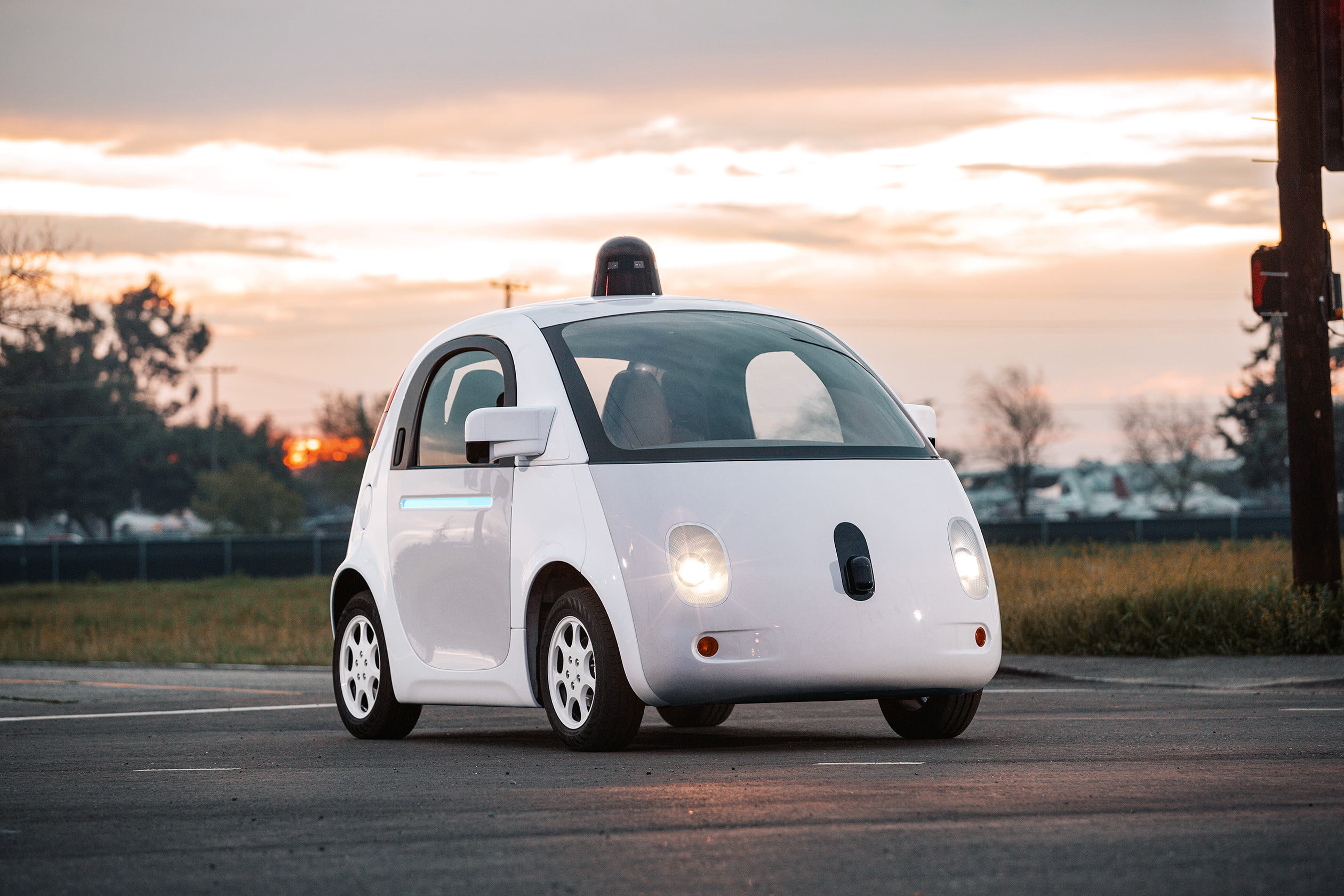
Google Driverless Cars – The Future of Autonomous Travel
By Author – Rashmita Soge
Introduction to Car
Imagine a car that can drive itself — one that doesn’t need your hands on the wheel or your eyes on the road.
The Google Driverless Car, now known as Waymo, is designed exactly for that purpose.
It can:
-
Steer itself while avoiding obstacles.
-
Accelerate to the correct speed automatically.
-
Stop, start, and adjust according to traffic conditions.
-
Take passengers to their destinations safely, legally, and comfortably — without human intervention.
What is the Google Driverless Car?
A driverless car (also called a self-driving car, automated car, or autonomous vehicle) is a robotic vehicle that can travel between destinations without a human operator.
To qualify as fully autonomous, a vehicle must:
-
Navigate without human control,
-
Reach a predefined destination,
-
Travel on regular roads not modified for its use.
In essence, these vehicles combine artificial intelligence, sensors, and advanced mapping technologies to mimic — and often surpass — human driving capabilities.
Main Components of Google Driverless Car
Google’s driverless technology integrates Google Maps, hardware sensors, and artificial intelligence into one seamless system.
1. Google Maps
Provides detailed road data, including lane markings, signs, and routes.
2. Hardware Sensors
Continuously monitor the environment — detecting nearby vehicles, pedestrians, traffic signals, and road conditions in real time.
3. Artificial Intelligence (AI)
Processes all the data from sensors and maps to make real-time driving decisions like a human would.
Brief History
The concept of self-driving cars isn’t new — it dates back to the 1920s, with technological leaps in the 1950s.
However, the idea truly began to materialize in the 1980s with the rise of computers.
Since then, companies like Mercedes-Benz, Toyota, General Motors, Nissan, Bosch, Renault, and Google have developed autonomous prototypes.
Google’s project was initially led by Sebastian Thrun, co-inventor of Google Street View and former director of the Stanford Artificial Intelligence Laboratory.
His team built “Stanley”, the robot car that won the 2005 DARPA Grand Challenge — a key milestone that proved the viability of autonomous driving.
How Google’s Self-Driving Cars Work
Here’s how the process unfolds step by step:
-
The driver sets a destination.
The software calculates the best route and begins the journey. -
LIDAR (Light Detection and Ranging) – A rotating sensor on the roof monitors a 360° view of the surroundings up to 60 meters away, creating a dynamic 3D environment map.
-
Wheel Sensors – Measure vehicle movement and position in relation to the map.
-
Radar Systems – Detect distances and movement of nearby objects through front and rear bumpers.
-
Artificial Intelligence Software – Integrates all sensor data with Google Maps and Street View for navigation and decision-making.
-
Human Override – A manual override is available, allowing human control in special situations.
Advantages of Driverless Cars
The benefits of autonomous vehicles extend far beyond convenience:
-
Fewer Accidents
Over 80% of car crashes are caused by human error. Autonomous cars eliminate distractions, fatigue, and impaired driving. -
Enhanced Comfort
Without the need to focus on driving, cars can become mini leisure rooms with entertainment systems, workstations, or even beds for overnight travel. -
Improved Traffic Flow
Coordinated vehicles mean fewer traffic jams, better fuel efficiency, and reduced travel time. -
Accessibility for All
The elderly, disabled, and even children could travel independently — no driver’s license needed. -
Lower Insurance Costs
Fewer accidents mean significantly reduced premiums. -
Fuel Efficiency
Precise control and smoother driving reduce unnecessary acceleration and braking, saving fuel. -
Self-Parking Ability
The vehicle can drop you off, find parking on its own, and return when needed. -
Reduced Theft
Smart, self-aware vehicles make unauthorized use nearly impossible.
Technology Behind Google’s Self-Driving Cars
Google’s Waymo project has equipped vehicles like the Toyota Prius, Audi TT, Fiat Chrysler Pacifica, and Lexus RX450h with advanced autonomous systems.
The company’s own custom car, developed by Roush Enterprises, uses parts from Bosch, ZF Lenksysteme, LG, and Continental.
Key technologies include:
-
LIDAR System ($70,000): 64-beam laser that creates precise 3D maps.
-
HD Mapping: Tracks lane markings, traffic lights, and landmarks with inch-level precision.
-
Radar + Cameras: Ensure full environmental awareness in all conditions.
-
Cloud Computing: Performs complex processing on remote data servers.
Google’s collaboration with Intel (2017) further accelerated AI performance and hardware efficiency for real-world road testing.
The Future of Driverless Cars
The arrival of autonomous vehicles will transform how we travel and live:
-
No Need for Driver’s Licenses
Just like taking a train or bus, anyone — regardless of age or ability — will be able to use these vehicles safely. -
Rise of Car-Sharing Programs
Cars will drop one passenger, then pick up another — promoting efficient use and reducing pollution. -
Infrastructure Compatibility
Existing roads are already suitable for autonomous cars; no major changes are required. -
Smarter Intersections
Future cities will feature sensors and radar systems to control intersections, eliminating red lights and traffic jams. -
Dedicated Driverless Car Lanes
These high-speed lanes could allow autonomous vehicles to travel at up to 100 mph by 2040, increasing efficiency and reducing congestion.
Conclusion
The Google Driverless Car (now Waymo) marks a major milestone in the evolution of transportation.
By combining artificial intelligence, advanced sensors, and real-time data, these vehicles promise safer roads, reduced emissions, and ultimate travel comfort.
Driverless technology is not just a concept — it’s the future.
And that future is arriving faster than ever, one autonomous mile at a time.
Written by:
Rashmita Soge
Published on Jain Software Blog
Central India’s Leading Software & IT Solutions Company
www.jain.software