business software development Tag

Transforming Education in Raipur: A Deep Dive into Jain Software’s E-Learning Solutions

In the busy city of Raipur, where old rules meet new tech tools, education is changing deeply because Jain Software invented a way to learn online. This blog about technology wants to understand how Jain Software has changed the way people learn in Raipur. It will look at how online learning grows and its big effects for students, teachers, and everyone else too.

The E-Learning Revolution in Raipur
As the world gets used to technology, learning is changing in a big way. The old school learning place is changing into a new, tech using student area and Jain Software in Raipur leads the way.

1. Accessibility and Inclusivity:

Breaking Geographical Barriers: Jain Software’s online learning has gone beyond the problems of old school teaching. It lets students in Raipur use good study materials no matter where they live.

Inclusive Learning Opportunities: E-learning helps different ways of learning and needs. Jain Software’s solutions use pictures, sound and changing learning parts. They also have tests that you can talk with to make sure everyone is included in education even if they learn differently from the usual way.

2. Personalized Learning Journeys:

Adaptive Learning Platforms: Jain Software’s online learning systems use smart ways to change lessons based on each student’s skills and progress. This individual way helps students learn on their own speed, creating a better grasp of the topics.

Customized Learning Paths: Teachers can make special learning paths for students, focusing on certain goals they need to reach. This flexibility makes the learning experience better and quicker for students from Raipur with different needs.

Empowering Educators with Technology
Jain Software’s effect on Raipur’s school system goes beyond helping students. Adding technology to learning helps teachers, making a better and more active way of teaching.

1. Online Course Development Tools:

User-Friendly Interfaces: Jain Software gives teachers easy-to-use tools for making fun internet classes. These sites help teachers make lessons and tests full of content without needing to know much about computers.

Multimedia Integration: Jain Software makes e-learning software that can easily add videos, cartoons and interactive games. This environment with lots of media makes school stuff better and more effective.

2. Real-time Progress Tracking:

Data-Driven Insights: Jain Software’s online learning tools give quick stats so teacher can see how students are doing, find things to get better on and change teaching ways if needed. This method that uses data makes the ways we teach better.

Assessment Tools: Automatic tests help make grading easier and let teachers pay more attention to giving special feedback for each student’s needs. This change in testing style helps make things more complete and focused on the needs of students.

Community Engagement and Collaborative Learning
Jain Software’s online learning tools go beyond the limits of classrooms, helping to build community involvement and group study environments in Raipur.

1. Virtual Classrooms and Webinars:

Interactive Learning Sessions: Jain Software helps to connect students in a virtual space by using online classrooms and webinars. This helps students talk and work together, even if they are far apart. It makes everyone feel connected in a community too.

Guest Lectures and Expert Sessions: E-learning platforms let teachers bring in guest speakers and experts from all over the world. This connection helps students see things from different angles and links them with a worldwide group of knowledge and skill.

2. Collaborative Learning Platforms:

Group Projects and Discussions: Jain Software’s team learning tools help with group projects and talks. This way of working together makes teamwork better, helps with talking skills and allows people to work in different places online.

Peer-to-Peer Learning Opportunities: Kids can learn from each other by talking in groups and working together on projects. People sharing their thoughts and views helps make learning exciting.

Overcoming Challenges in E-Learning Adoption

E-learning has clear advantages, but moving from normal to digital schooling comes with some problems. Jain Software deals with these problems, making sure e-learning in Raipur is smooth and effective.

1. Digital Literacy Initiatives:

Teacher Training Programs: Jain Software holds programs to teach computer skills and train teachers. This helps educators be good at using online learning platforms.

Student Workshops: Workshops for students help improve skills in using digital tools, check if they can handle online learning systems and work together on the internet. They also make sure that all available resources are used to their full potential.

2. Infrastructure Development:

Access to Devices: Jain Software works with schools to make sure students can use the needed gadgets. Things like giving tablets, laptops or helping computer labs are used to beat structure problems.

Internet Connectivity Solutions: Understanding how very important the internet is, Jain Software looks for answers. They might work together with local companies that provide internet to make sure students can get fast and cheap online access.

Looking Ahead: A Tech-Driven Educational Renaissance

Jain Software’s effect on Raipur education is not just a short change but it leads to long term transformation towards educating with technology in the city. Using e-learning tools, Raipur has become a place for education that’s easy to get and open to everyone.

As technology keeps changing, Jain Software is still focused on making education better in Raipur. The trip has just started, and the city’s kids along with their teachers and community are ready to get advantages from learning experiences made better through technology. Welcome to the future of learning in Raipur – where Jain Software’s e-learning solutions help you learn, work together and explore endless chances!


 

Revolutionizing E-Governance

Introduction

In today’s fast-paced digital era, mobile applications have become a critical part of every successful business. As demand for apps across multiple platforms continues to rise, developers face growing pressure to build high-quality, user-friendly applications that function seamlessly on both iOS and Android—while keeping development time and cost under control.

This is where cross-platform app development proves essential. Frameworks such as React Native make it possible to build robust, efficient applications that run smoothly across different operating systems without compromising performance or user experience.

At Jain Software, we understand how vital it is to adopt modern technologies that deliver powerful results for our clients. This guide explores cross-platform app development using React Native, its benefits, and the best practices that help developers build scalable, high-performance mobile applications.


Understanding React Native

React Native is an open-source framework developed by Facebook that enables developers to create mobile applications using JavaScript and React. Unlike traditional hybrid frameworks, React Native offers a native-like experience, delivering the same speed, smoothness, and responsiveness as applications built using native languages such as Java or Swift.

A major advantage of React Native is code reusability. Developers can write a single codebase that operates on both iOS and Android, reducing development effort, time, and cost. This approach allows businesses to accelerate product delivery while reaching a broader audience without maintaining separate codebases for each platform.


Key Benefits of Using React Native for Cross-Platform Development

1. Faster Development Time

React Native allows developers to write code once and deploy it across multiple platforms. This eliminates the need for maintaining separate codebases for iOS and Android, resulting in shorter development cycles, reduced costs, and faster time to market.

2. Native-Like Performance

Applications built with React Native deliver near-native performance. The framework leverages native components and APIs to ensure smooth animations, fast loading times, and responsive user interfaces across all devices.

3. Hot Reloading

React Native’s hot reloading feature allows developers to view the results of their code changes instantly without rebuilding the entire application. This feature boosts productivity, simplifies debugging, and significantly speeds up the development process.

4. Large Developer Community

React Native benefits from a strong global community. Developers have access to a wide range of open-source libraries, UI components, and third-party integrations. These resources simplify development, reduce repetitive work, and enable teams to add advanced functionalities more efficiently.

5. Cross-Platform Compatibility

React Native enables developers to build applications that deliver consistent user experiences across both iOS and Android platforms. This consistency strengthens brand identity and ensures reliable performance for all users.


Best Practices for React Native App Development

1. Follow Platform-Specific Guidelines

While React Native promotes code sharing, adhering to platform-specific guidelines is essential. Following Apple’s Human Interface Guidelines and Google’s Material Design principles ensures a native-like interface and a smooth user experience on each platform.

2. Optimize Performance

Performance optimization is key to delivering seamless experiences across devices. Minimize rendering time, use lazy loading for heavy assets, and implement code splitting to improve speed and responsiveness.

3. Use Native Modules and APIs

Leverage React Native’s ability to integrate with native modules and APIs to access device-specific features such as sensors, cameras, and GPS. This integration enhances functionality and provides a more engaging experience for end users.

4. Test Across Multiple Devices

Comprehensive testing ensures that applications perform consistently across different screen sizes and devices. Use testing frameworks such as Jest and Enzyme for unit testing, and Appium or Detox for end-to-end testing.

5. Monitor and Optimize App Performance

Employ performance monitoring tools like React Native Performance Monitor or Firebase Performance Monitoring to track performance metrics. Regularly analyze user feedback, identify areas of improvement, and update the app to maintain an optimal experience.


Conclusion

React Native has redefined mobile app development by allowing developers to create powerful, feature-rich, cross-platform applications using a single codebase. It enables faster development, reduced costs, and enhanced scalability—making it an ideal choice for businesses seeking efficiency and innovation.

At Jain Software, we specialize in delivering cutting-edge digital solutions that help our clients thrive in a technology-driven world. Whether you are a startup building your first mobile application or an enterprise expanding your digital reach, our expert development team can help you design and launch scalable React Native apps that align perfectly with your business goals.

Navigating the Digital Frontier: Cybersecurity in the Digital Age

In a time when almost everything in our lives is connected to digital tech, the importance of protecting against hackers can’t be ignored. As we move through the online world, doing money things and sharing private details while also depending on connected networks, it has become much more important to use strong internet safety measures. In this tech blog, we will look at the growing world of cybersecurity in digital times. We will talk about problems, new ideas and top tips that are changing how we keep our online life safe.

The Digital Transformation Dilemma

The internet age has made things more easy, connected and fast. Our use of digital platforms like online banking and smart homes has increased a lot. But, this greater connection also gives a lot of chances for cyber-attacks that can mess up our important data and privacy. Even the strength of key infrastructures can be affected by them.

1. The Pervasiveness of Cyber Threats:

Malware and Ransomware Attacks: The online world is full of bad software looking to take advantage of weaknesses in systems and steal money from people.
Phishing Schemes: Phishers, which are bad people online, use smart tricks to fool others into sharing private data like passwords and money details.
Data Breaches: Big data leaks are very scary nowadays, showing the private details of millions of people.
Evolving Cybersecurity Strategies
Because the danger from cyber-attacks is growing, how we protect our computers and networks has changed a lot. People, groups and governments are taking steps to protect internet stuff like money. They also keep online systems safe from bad things happening.

1. Artificial Intelligence (AI) and Machine Learning (ML):

Predictive Analysis: AI and ML rules are more often used to guess or stop online threats by looking at trends, spotting unusual things quickly. They can act right away when needed.
Behavioral Analysis: These tools make online protection better by watching and studying what people do. They watch for any changes from usual behaviour, warning if a security break might happen.

2. Multi-Factor Authentication (MFA):

Enhancing User Authentication: MFA makes things safer by asking for several ways to prove who you are, like using passwords, body measurements or security cards.
Mitigating Credential Attacks: MFA helps stop people from getting into things without permission, especially when attacks that use passwords are common.

3. Blockchain Technology:

Decentralized Security: The decentralized and unchanging nature of blockchain makes it a strong tool to protect transactions, information and even personal identity.
Securing Supply Chains: More and more, blockchain is being used to protect supply chains. This makes sure products are real and stops them from being changed or messed with.

4. Endpoint Security:

Protecting Devices: As the number of linked gadgets increases, it becomes very important to protect them. This means making sure each device like computers, smartphones and IoT gadgets are safe.
Advanced Endpoint Protection: Modern antivirus programs use smart threat spotting tools to find and stop growing online threats.

5. Cloud Security:

Securing Virtual Environments: As cloud computing grows, making sure that data stored and worked on in online spaces stays safe is very important.
Zero Trust Architecture: Setting up a zero-trust system, where you don’t automatically believe anyone and they need to prove who they are before getting access to things in the cloud makes security better.

6. Collaborative Threat Intelligence Sharing:

Information Sharing: More and more cybersecurity workers or groups are giving out threat information to keep up with changing threats.
Collaborative Defense: Working together to share information about cyber threats makes it harder for bad people on the internet.

Challenges in Cybersecurity
While technology is helping make the internet more safe, there are still problems. We need constant new ideas and teamwork to reduce risks properly.

1. Insider Threats:
Malicious Insiders: People who have information that needs to be kept secret can cause a big problem if they wish harm.

Unintentional Risks: When people accidentally share private info or lose it without meaning to, this is hard.

2. Cybersecurity Skill Gap:

Increasing Demand: The need for good computer security experts has increased a lot, but there are not enough people who can do the job well.
Continuous Training: Training and learning programs that keep going are very important to give professionals the newest knowledge and skills.

3. Rapidly Evolving Threat Landscape:

Zero-Day Exploits: Cyber attacks are changing fast. They use weaknesses that they sometimes don’t tell cyber security experts about (zero-day exploits).
Adaptability Challenges: We need to keep changing our computer security rules because new dangers are always coming up. This calls for a versatile way of protecting ourselves from attacks on the internet.
Top Tips for People and Businesses

As people and groups move in the age of internet, it is very important to follow best ways for online safety. This will keep us safe from threats that are constantly changing.

Top Tips for People and Groups
As peoples and groups move into the digital world, they need to follow top rules in computer security. This will protect them against always changing threats that keep coming their way.

1. Regular Software Updates:

Patch Management: Make sure you always update software, operating systems and applications to fix known weaknesses.
Automatic Updates: Use automatic updates when you can to make sure security fixes are put in place quickly.

2. Strong Password Practices:

Complexity and Uniqueness: Make big and hard-to-guess passwords for different accounts. Don’t use the same one on many websites or apps.
Multi-Factor Authentication (MFA): Use MFA for more safety, especially on important accounts.

3. Security Awareness Training:

Educating Users: Teach workers and users often about good internet safety habits, usual dangers, and how to spot tricky emails.
Simulated Attacks: Run fake phishing games to check and make people more strong against real dangers in the world.

4. Data Encryption:

End-to-End Encryption: Use secret coding for important talks and save data safely to stop people from getting it without permission.
Secure Communication Channels: Make sure that information sent between devices and networks is hidden so people can’t see it.

5. Robust Backup Systems:

Regular Backups: Keep important data safe in different places to lessen the damage of ransomware attacks or loss of information.
Testing and Restoration: Check your backup systems often to make sure they can be quickly and properly brought back up in case of a computer problem.

6. Incident Response Planning:

Incident Response Teams: Set up special teams to quickly find, handle and get back from internet safety problems.
Comprehensive Plans: Make and often change plans for how to handle incidents, including ways of talking with others, stops you can make and processes to get better.

Looking Ahead: A Collective Responsibility
As we see how fast technology is improving, it’s important for people, businesses and governments to protect our digital worlds. Cybersecurity isn’t something you just reach once; it’s a moving forward thing that always needs change, new ideas and working together. By using the best ways, taking advantage of new technologies and building strong protection against cyber attacks. We can all safely go through electronic zones in future generations!

Learning web development skills are a new way to present something digitally

gfdgfdg

For businesses to succeed in this new digital era, an online presence that attracts potential customers is a necessity. At Jain Software, we believe in utilizing influential web development to create a strong digital existence for any brand. This blog discusses how web development and its complexity have been a pivotal role in transforming modern businesses.

  1. Understanding Web Development

Web development consists of those activities which are beneficial to make the website more engaging preferred by the visitors. This step includes all the functionalities that we perform-related tasks to maintain and create our website like businesses, blogging services, or e-commerce sites. It comprises two primary aspects: Front-end and back-end development are the core areas of software development that define how an application will function. The front end development is considered to be responsible for creating intuitive and responsive interfaces, as well interesting experiences. In contrary the back-end development deals with everything in the server side such as database maintenance, and API handling

  1. Front-End Development: Crafting User Experiences

The front-end development requires the skills to create good user interfaces, and it is done using HTML, CSS, and Javascript. This will make the experience of the user that is visually appealing and seamless for visitors who come to the website. The use of fast and efficient technologies like React, Angular, and Vue.js has significantly impacted web applications by making them more interactive.

  1. Back-End Development: Powering Functionality

In back-end development, developers use various scripting languages to write scripts that help the software communicate with the database efficiently. and manage the database so that system can work effectively. It provides functionality to users that are not interacted in a straight way. Instead, they use server operations, databases and so on for those functionalities. Backend systems are made by using certain languages like Python, Node.js, PHP and some frameworks like Django, Express.js and Laravel.

  1. Full-Stack Development: The Best of Both Worlds

A person needs to be specialized in front-end and back-end technology to become a full-stack developer. A person who is skilled in becoming a full-stack developer can control edge processing web development, which is between user design and server-side performance. This characteristic provides a broad yet comprehensive perspective of the entire process at hand.

  1. Importance of Responsive Design

With the increase in the usage of mobile devices, it is important that webpages are designed in a responsive manner. Websites are supposed to provide a good user experience for this they should adapt with different devices without any problems. The website should be designed in such a way that it can be accessed anywhere. On laptops, pcs or mobiles.

  1. SEO and Web Development: An Integral Connection

Web development and search engine optimization (SEO) are interconnected procedures. A website that is well structured and loads rapidly will increase your SEO ranking. During the development phase, if website elements are enhanced this will lead to greater user interaction and search engine optimization.

  1. E-Commerce and Custom Solutions

Web development field requires certain crucial skills like developing commerce-based interfaces and producing strategies tailored for specific needs. E-commerce platforms must have particular functionalities for all dealings that are done online, custom solutions can provide the tailored features and apps according to requirements for specific businesses.

  1. The Jain Software Approach: Crafting Innovative Solutions

In the company, we have better expertise in making desired solutions for our clients. We are an expert team in developing custom web applications, interactive interfaces for our clients that help in achieving their digital goals efficiently.

Conclusion

Brand’s digital presence relies heavily on the developing platform. Today, every business needs an identity online and we can shape that identity effectively through Jain Software. We focus on providing an unmatched digital experience to clients by delivering user-centric web and mobile solutions.


In the city of Raipur, Jains Software aims to build digital platforms.


Software development methodologies: increasing efficiency in software projects.

In the fast-paced realm of software development, using an effective methodology can make or break a project. The Jain Software team in Raipur knows how important strong methodologies are for delivering excellent software products and solutions. Let’s explore different kinds of software development methodologies, their core principles and how they affect the nature of a specific cycle in this blog post.


  1. Waterfall Methodology: Sequential and Structured

Waterfall works in a linear fashion, where development flows through requirements, design, implementation and test phases by carefully dotted steps. Each stage depends on the completion of its predecessor, providing a systematic method particularly suited to projects with clearly defined requirements.

  1. Agile Methodology: Iterative and Collaborative

The agile methodology is all about adaptability and teamwork, cutting the project into smaller pieces called sprints. It encourages continuous feedback, so teams can adapt to changes quickly. Because of their focus on customer satisfaction, incremental development and flexibility, agile methodologies such a Scrum and Kanban are especially suited to projects whose requirements change constantly.

  1. DevOps: Converging Development and Operations

DevOps is a culture and set of practices that stresses collaboration between development (Dev) and operations (Ops), with the goal being automation throughout all stages of software creation. The approach stresses shorter development cycles, continuous integration and delivery (CI/CD), as well as automated testing to accelerate release cycle times while increasing quality.

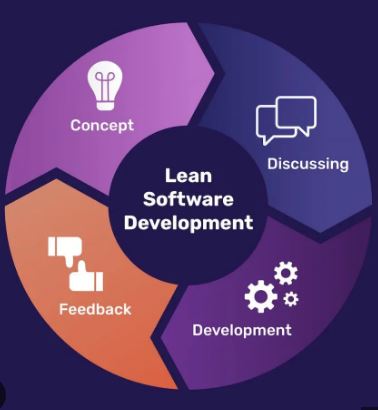
  1. Lean Software Development: Streamlined Efficiency

Lean methodology strives to eliminate waste, maximize efficiency and add value for the customer. It stresses continuous improvement, avoiding unnecessary processes, and the emphasis of value. Lean is strongly founded upon principles such as eliminating waste, increasing learning and empowering the team.

  1. Spiral Model: Iterative Risk Management

The Spiral model combines iterative development with aspects of the Waterfall Model and risk analysis. It consists of repeated cycles, each including planning, risk analysis, engineering and evaluation. This methodology is suitable for complex projects, where risk management and frequent evaluations are important.

gdfg

Choosing the Right Methodology: Considerations and Factors

Selecting the appropriate methodology for a project involves considering several factors:

  • Project Type and Scope: From this analysis of project complexity, requirements and uncertainties we can determine the best-fit methodology.
  • Team Size and Expertise: Such assessment of team capabilities and expertise can help with the choice of methodology that suits its strengths.
  • Client Collaboration: Some methodologies stress client involvement and feedback. Others follow a more rigid format.
  • Flexibility and Adaptability: Understanding the need for adaptability to changes throughout a project’s lifetime is essential.

The Jain Software Approach: Tailoring Methodologies for Success

We know at Jain Software in Raipur that there’s no single methodology to fit all projects perfectly. Therefore we use an approach which combines the advantages of different methodologies according to particular project needs. Efficiency, quality and client satisfaction Our team carefully assesses project needs along with customer expectations against the capabilities of our people to choose a strategy that is both effective and well received.


Conclusion

Thus, software development methodologies provide guiding frameworks to direct the course of a software project. At Jain Software in Raipur, we are aware that the choice of methodology is important to the success of a project. Looking to build on the strengths of each methodology and customize our approach, we hope to provide high-quality software that doesn’t just meet expectations but helps fuel success.

A detailed blog post offers understanding about software development methodology with insights on their importance and how Jain Software in Raipur adopts different approaches for projects to be successful.

Enterprise Software Development

Understanding Enterprise Software Development

Enterprise Software Development

The process of developing software applications specifically designed to address the unique needs and problems of large-scale organizations is referred to as enterprise software development. These solutions cover a wide range of features, such as supply chain management, customer relationship management, human resources, and resource planning. Enterprise software, as opposed to commercially available software, is made to effortlessly integrate with the special workflows and complexity of an organization.

How Jain Software Leads in Enterprise Software Development

As an enterprise looking to gain a competitive advantage, you understand the importance of custom software solutions tailored to your unique business needs. However, developing enterprise software requires significant investments of time, money, and resources. Many companies struggle to build software in-house and end up with solutions that fail to fully address their key challenges.

Jain Software is a leader in enterprise software development, with over 15 years of experience delivering custom solutions for companies of all sizes. By offering end-to-end services, they enable you to concentrate on your core business while they take care of your digital transformation. These services range from ideation and design to development and support.

Look no further than Jain Software for enterprise software that produces tangible results. Our proven process and passion for client success have made us a trusted companion for companies around the world.

Enterprise Software Development Expertise

Jain Software has more than 15 years of experience creating specialized business software. Our knowledge in this industry allows us to create robust, scalable, and cost-effective solutions for your business.

  • We have a strong track record of delivering ERP systems, CRM platforms, business intelligence tools, and more for mid-size to big enterprises.
  • Our team follows industry best practices for enterprise architecture, ensuring your software is flexible, interoperable, and built for growth.
  • We utilize a variety of programming languages and frameworks suitable for enterprise-level software including Java, .NET, PHP, and Python.
  • In order to comply with compliance standards like HIPAA for healthcare organizations and PCI DSS for e-commerce companies, our software is designed with security in mind.
  • For the custom solutions we create, we provide maintenance and support so you can keep your software up to date and functioning at its best.

For more details on our enterprise software development services or to discuss your project requirements, please contact us.

Jain Software- Enterprise Software Development

Why Jain Software Is the Best Choice for Your Next Software Project

  • Expertise and Experience
  • Cost-Effective Solutions
  • Strict Security and Compliance Standards
  • Dedicated Project Management

Conclusion

Enterprise software development has become a game-changer for businesses looking to improve efficiency, streamline operations, and spur expansion. Enterprise software development enables companies to stay ahead in a market that is changing quickly through customized solutions, streamlined processes, improved collaboration, data-driven decision-making, and increased security. Organizations may unlock their real potential and find long-term success in today’s digitally driven environment by utilizing the possibilities of custom software solutions.

Customized Software Development -CSD

Jain Software team have developed more than 1200+ customized software on various technologies like BIG DATA ,Informatica ,Java,Spring,Hibernate,JBoss,Linux Scripting,Python,Php,C#,etc .We’re leader in whole chhattisgarh in Customized Software Development as per business requirements . We’re the Central India’s Fastest growing software company situated at heart of Raipur . Imp points aboutCustomized Software Development :

  • This Software designed for Specific user, Organization or companies.
  • This software is not usually a product.
  • Actually this product a specific buyer provided under contract.
  • Custom Software application to increase Productivity or address an internal need, the price of it is offset by the promise of increased efficiency.
Request a Free Estimate
Enter Your Information below and we will get back to you with an estimate within few hours
0