Marketing

Digital India: A Planning towards future or Enforcement of Technology

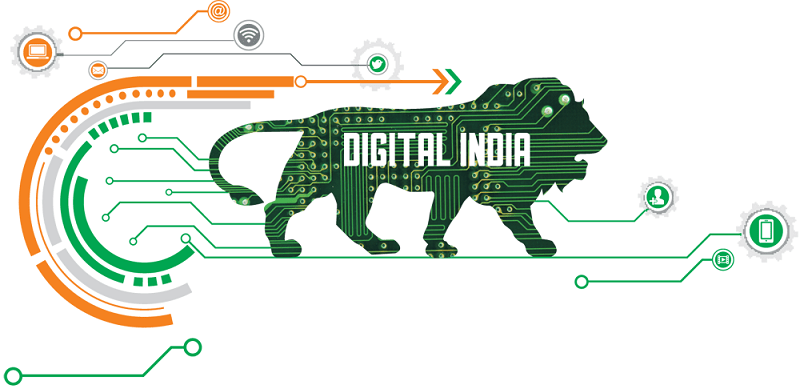
A lot has been done till date by the government of India with the Digital India plan, the idea behind this plan was definitely to just improve ourselves as to digital world and to adopt the changes as the world is changing so not to lack behind. It is mentioned in the website of digital India, that Digital India has a vision transform India into a digitally empowered society and knowledge economy. But my main concern is after the two years of the program being launched I dont see much of the people which is other than the young generation is not at all ready to run parallel to the rest India.

Digital India to them is like thrusting a piece of cake to their neck, it is good, it is healthy and even delicious but still not adaptive to the ones who dont want to eat. This is felt by most of the people in this country.

The main problem is that nobody knows what to do, how to do, and after some struggle if feels uncomfortable to them to do. The initiatives on infrastructure, services, and empowerment are really appreciable yet not reachable by most of the audience. What is needed is the consultation, which is also provided but not in the well-guided manner, which eventually makes out of no fruit.

The plans under digital India, Startup India, and Skill India also impacting great but still the thrust of hammer not enough to bend the metal, means a lot of promotion and consultation is needed to do reach out to people, ideas are endless by people for rural development and strong infrastructure and economic growth proper monitoring is needed, as a tree needed the most care when was a plant.

Digital India plan is definitely a boon for all individuals if they can utilize the opportunity, a complete description of approach and methodology for digital India program which looks very active words when you see in website but what is been acted, very little as per my knowledge.


Well, I am not here to just talk about everything that is dark going on in this world, many things goes positive and actually has changed after the Digital India plan. Plans which actually made an impact to the governance under the digital india are can be mentions as

  • High-speed connectivity and high-speed internet at most remote and inaccessible areas to grow the communication and connect India to the world and newer ideas. Its a National Rural Internet Mission.
  • E-Governance?Improving governance using technology. This is to improve the government to citizen interface for various service deliveries.
  • E-Kranti ?Deliver services electronically and thus in a faster and time-bound manner. This is helpful in education, healthcare, planning, security, financial inclusion, justice, farmers, etc.
  • Information for all –This will bring in transparency and accountability by easy and open access to documents and information to the citizens.
  • Electronics manufacturing ?This will encourage manufacturing of electronics in India and reduce electronics import and help in job creation too. This will help in achieving goals of Make in India initiative also.
  • Cyber Security ? Government giving now focus on the security part of the data that usually leaks and the data can be used in important hands
  • IT for jobs ?Skill India mission under the Digital India mission helping students to learn the practical and industrial level experience to enhance their performance.

After seeing all this points I think I have increased your dilemma that Digital India plan/campaign is really doing any good or was and is doing great. Well my point in this is that we are doing good, but changes always happen when you do great and with a great pace, I am much of concerned about over very slow growing and learning speed. We need to implement everything fast but at the same time made it convenient for people to use else it wont to anyone till we act on it strongly and boldly on it.

C James Yen said beautifully once that, Technical know-how of the experts must be transformed into practical do-how of the people.
Big Data

Understanding Big Data: The Future of Information and Analytics

By Author – Shubhangi Agarwal


Introduction

Big Data represents a new, non-traditional approach to organizing, processing, and gaining insights from extremely large datasets. While the challenge of managing data that exceeds a single computer’s storage or computing power isn’t new, the scale, speed, and importance of such data have expanded significantly in recent years.

In this article, we’ll explore the fundamentals of Big Data, its defining characteristics, and the technologies that are shaping how organizations use it today.


What Is Big Data?

Defining “Big Data” precisely can be difficult, as it means different things to different people — from researchers and engineers to businesses and technology vendors. However, in general terms, Big Data refers to the computing strategies and technologies used to handle datasets that are too large or complex to be processed using traditional tools.

In this context, a “large dataset” is one that cannot be efficiently managed, stored, or analyzed using a single machine or conventional software systems. The definition of “large” also evolves over time as technology advances — what was considered Big Data five years ago might be manageable today on standard systems.


Why Big Data Systems Are Different

While the basic principles of working with data remain the same, Big Data brings unique challenges due to its:

  • Massive scale – The sheer size of datasets.

  • High velocity – The speed at which data is generated and processed.

  • Complex structure – The diversity of data formats, from structured tables to unstructured text, video, and social media feeds.

The main goal of Big Data systems is to extract insights and connections from vast amounts of heterogeneous information that would otherwise remain hidden using conventional analysis methods.


Big Data Analytics

Big Data Analytics is one of the most transformative areas in modern IT. As data continues to grow exponentially, organizations are racing to turn this information into actionable insights that can drive smarter decisions, innovation, and competitive advantage.

Emerging technologies like Hadoop and MapReduce have revolutionized how companies handle large, unstructured datasets. These tools allow distributed processing across multiple servers, enabling real-time analytics and efficient data management.

However, Big Data also brings challenges in areas like:

  • Data capture and storage

  • Data analysis and querying

  • Visualization and sharing

  • Security, privacy, and governance

To understand Big Data better, experts often refer to its five key dimensions, known as the 5 Vs:

  1. Volume – The sheer quantity of data generated every second.

  2. Variety – The diverse formats of data (text, audio, video, images, etc.).

  3. Velocity – The speed at which new data is created and needs to be processed.

  4. Veracity – The accuracy and reliability of data.

  5. Value – The usefulness and insights derived from the data.


Applications and Importance of Big Data

Today, Big Data is not just about handling large datasets — it’s about using predictive analytics, user behavior analytics, and advanced data modeling to generate value.

When used effectively, Big Data can help organizations:

  • Reduce costs through optimized resource utilization.

  • Save time with faster processing and automation.

  • Develop new products tailored to customer needs.

  • Make smarter, data-driven decisions with real-time insights.

The true importance of Big Data lies not in how much data an organization collects, but how it uses that data to improve performance, efficiency, and innovation.


Real-World Impact

Big Data has applications across industries — from science and medicine to business and governance. For instance:

  • Scientists use Big Data in genomics, meteorology, and environmental research.

  • Businesses analyze customer data to identify trends and optimize offerings.

  • Governments use it for policy development, urban planning, and crime prevention.

  • Healthcare providers rely on Big Data to predict disease outbreaks and improve patient care.

As the digital ecosystem grows, Big Data continues to shape how decisions are made, how businesses operate, and how innovation evolves globally.


Big Data Projects at Jain Software

At Jain Software, we recognize the power of Big Data in driving transformation across industries. Our team specializes in developing Big Data-based projects that help organizations harness data for actionable insights and strategic decision-making.

For collaboration, inquiries, or project consultations, reach out to us:
📞 Call: +91-771-4700-300
📧 Email: Global@Jain.software

PRATYUSH

India Unveils Its Fastest Supercomputer – “Pratyush”

On Monday, January 8, 2018, India proudly unveiled its fastest supercomputer, ‘Pratyush’, an advanced high-performance computing system capable of delivering a peak power of 6.8 petaflops.

To put it in perspective, one petaflop equals one million billion (10¹⁵) floating-point operations per second, representing an enormous leap in computational capacity.

According to the Indian Institute of Tropical Meteorology (IITM), Pratyush ranks among the top four fastest supercomputers in the world specifically designed for weather and climate research. Its installation has propelled India’s position on the global Top500 list of supercomputers from the 300s to within the top 30, marking a major technological milestone.


Purpose and Functionality

The government had sanctioned ₹400 crore to develop a 10-petaflop machine aimed at advancing India’s weather forecasting capabilities. The core functionality of Pratyush lies in monsoon forecasting using dynamic simulation models.

These models simulate the weather patterns for months like June to September and predict real-time climatic behavior. With its immense computational power, Pratyush can now map Indian regions at a resolution of 3 km and global regions at 12 km, enhancing the accuracy of forecasts significantly.

The system is expected to be a game-changer in predicting natural calamities such as floods and tsunamis, and in monitoring monsoon behavior — crucial information for India’s agricultural sector. This advancement offers tremendous benefits for farmers, helping mitigate crop losses caused by unpredictable weather conditions.


Installation and Technical Setup

Pratyush has been deployed across two major institutions in India:

  • 4.0 petaflops HPC facility at IITM, Pune

  • 2.8 petaflops HPC facility at National Centre for Medium-Range Weather Forecast (NCMRWF), Noida

This distributed setup ensures continuous, high-speed data processing and efficient sharing of climate models between research centers.


Impact and Benefits

The installation of Pratyush marks a significant milestone in India’s commitment to scientific research and innovation. By accelerating computational modeling, the supercomputer will:

  • Strengthen weather and monsoon forecasting

  • Support disaster preparedness and management

  • Boost research activities across multiple Earth Science disciplines

  • Enhance the accuracy of early warnings for natural disasters

According to IITM, this increase in supercomputing power will have a profound impact on societal applications and academic research, giving a strong push to projects under the Ministry of Earth Sciences (MoES).


India’s Other Supercomputers

With Pratyush’s launch, India has entered the top 30 supercomputing nations globally. As of June 2017, the following Indian systems were also listed among the Top 500 supercomputers worldwide:

Rank Supercomputer Institute / Organization Model
165 SahasraT Indian Institute of Science (IISc), Bengaluru Cray XC40
260 Aaditya Indian Institute of Tropical Meteorology (IITM), Pune iDataPlex DX360M4
355 TIFR Cray XC30 Tata Institute of Fundamental Research (TIFR), Mumbai Cray XC30
391 HP Apollo 6000 XL230/250 Indian Institute of Technology (IIT), Delhi HP Apollo 6000

Conclusion

The unveiling of Pratyush marks a transformative step for India in the field of supercomputing and climate research. By combining massive computational power with advanced meteorological models, India is now better equipped to predict, prepare for, and respond to natural phenomena with enhanced precision — a major leap forward in both science and sustainability.

3D Touch

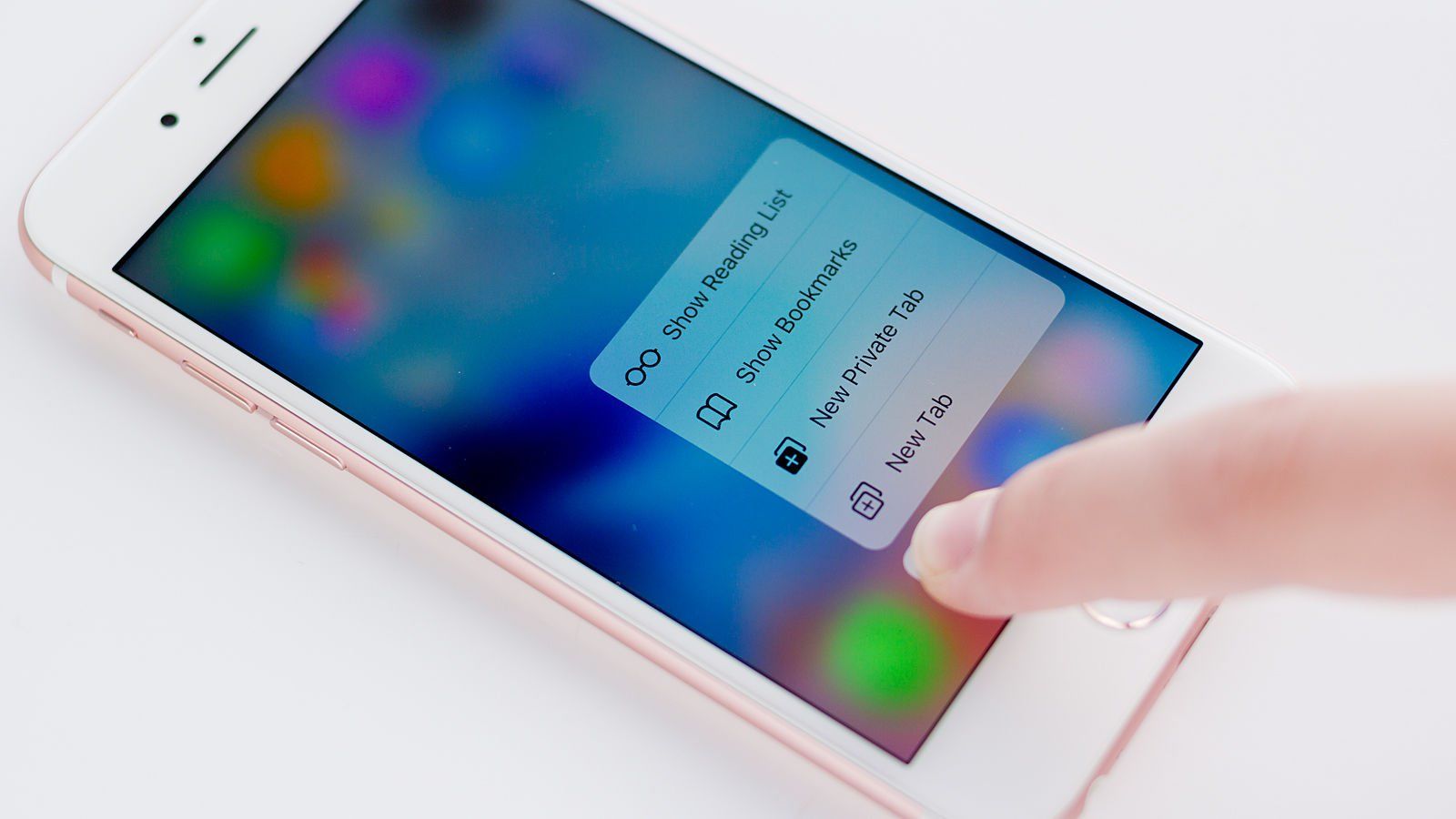
Force touch technology was not efficient in this upgrading world to resolve this problem 3D touch was introduced. Taking the Force Touch technology to an altogether new level, Apple launched 3D Touch on iPhone 6S and 6S Plus. Being more sensitive than Force Touch, 3D Touch has been developed to work using capacitive sensors integrated into the display.
Working-

In functionality, 3D Touch is really smart. It allows you to carry out certain tasks instantly through quick actions. It is generally essential for performing the tasks we intend to use most often. You don’t need to launch an app to carry out actions. As for instance, if you want to take a selfie, you don’t need to launch the Camera app. Simply light press on the Camera app, you get the option to Take Selfie right on your Homescreen.
Functionality for Peek and Pop-
In order to master 3D Touch, you need to understand Peek and Pop. While the former refers to a light press, the later is a hard press.
If you want to peek at a message, you just need to press it lightly. And, if you wish to pop into the message for a full view, you need to press it a little more deeply. That’s how it works!
Differentiating between Force Touch and 3D Touch-
Force Touch is smart enough to detect the pressure applied on the screen. It can detect not just multiple touches on the screen but can also calculate the difference in pressure on various points of the screen.
However, while reacting to your touch, Force Touch is not as fast as 3D Touch. The lightning fast response of the 3D Touch is because of the fusion of capacitive sensors and strain gauges. This fusion is perfected by the Taptic Engine.
The Future for Touch Technology-

Knowing the significance of how much 3D Touch has been appreciated by iPhone 6s users; touch technology is going to get a lot better in future. With the amazing ability to let iPhone owners use their device with more convenience and faster, it is here to stay.
Android smartphone makers are also working to provide 3D touch on their phones, currently, the Nougat version based smartphones are providing 3D Touch.

Social Media Presence & Maintenance

Proud to be stategovernments best Choice for managing their social accounts in efficient manner. After transferring social media accounts management to Jain Software ,social interaction from same accounts increased up to 700% .We works on real data ,not fake promises!

We innovate ,we impact ,We’re Logical thinkers of Social media !

Some facts are as follow :

A.Company A signed up with Jain Software to manage their ecommerce page of facebook ,in 200 days ,ecommerce sale from same facebook account increased from 43 orders/per day to 223 orders/per day .

B.Government of XYZ state handovered all social accounts including facebook,twitter & googleplus to Jain Software Team ,the direct interaction with general public is now increased to 600% .

C. Cabinet minister shared facebook credentials with Jain Software and asked us to manage them .Jain Software proudly managing it and engaging 9x visitors on same page per day .

Request a Free Estimate
Enter Your Information below and we will get back to you with an estimate within few hours
0