Technical

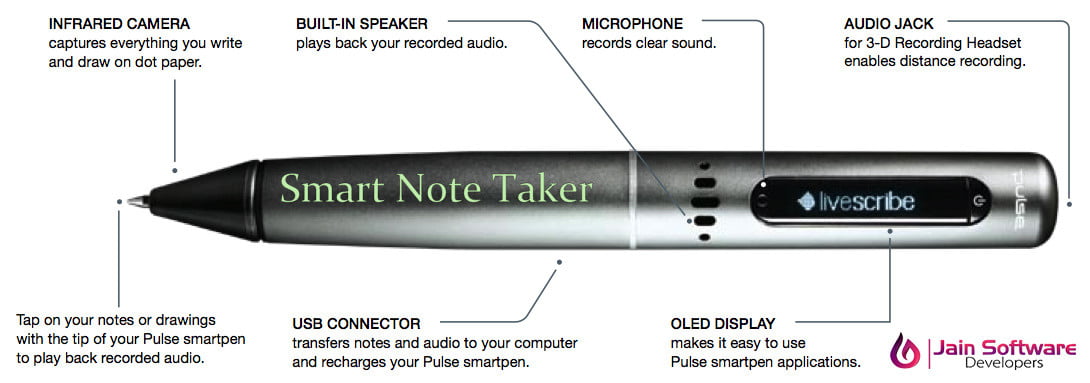
Smart Note Taker

Smart Note Taker :-

The Smart Note Taker is such a helpful product that satisfies the needs of the people in today’s technological and fast life. This product can be used in many ways. The Smart NoteTaker provides taking fast and easy notes to people who are busy with something else. With the help of Smart NoteTaker, people will be able to write notes on the air, while being busy with their work

The written note will be stored on the memory chip of the pen and will be able to read in digital medium after the job has done. This will save time and ease life. The smart note taker is good and helpful for blinds that think and write freely. Another place, where this product can play an important role, is where two people talks on the phone. The subscribers are apart from each other while their talk and they may want to use figures or texts to understand themselves better. It’s also useful especially for instructions in presentations.

The instructors may not want to present the lecture in front of the board. The drawn figure can be processed and directly sent to the server computer in the room. The server computer then can broadcast the drawn shape through network to all of the computers which are present in the room. By this way, the lectures are aimed to be more efficient and fun. This product will be simple but powerful. The product will be able to sense 3D shapes and motions that user tries to draw. The sensed information will be processed and transferred to the memory chip and then will be monitored on the display device. The drawn shape then can be broadcasted to the network or sent to a mobile device.

“Technology is the best when it brings people together”

Technical Definition of Smart Note Taker:-

In order to meet the technical requirements of the product we need Operating System Like Windows or Linux in order to implement software part of the project, Displacement Sensors to recognize the displacement of the pen in three dimensions, parallel cable to communicate with computer, software to solve the displacement data and finds the individual coordinate displacements in three axes and transform the data into text format, analog to digital converter to process analog displacement data and convert them into digital format, switch to control the pen and Rechargeable battery.

  • Analog to digital converter
  • Software program to convert data into text or string format
  • Operating System ??Parallel cable
  • Switch
  • Rechargeable battery
  • Displacement Sensor

“It’s Not faith in technology, It’s Faith in People

Note Taker for PC:-

PC Notes Taker is the world’s first device that captures natural handwriting on any surface onto a PC in real time. Based on a revolutionary electronic pen, PC Notes Taker displays the user’s handwritten notes, memos or drawings on the computer, and stores the image for future use. PC Notes Taker is ideal for markets where the handwritten input is essential, such as health, educational and financial sectors. Supplied with user-friendly software, PC Notes Taker is compatible with PCs and notebooks.

Adds Handwriting Input to any Computer PC Notes Taker is the world’s first device that captures natural handwriting on any surface onto a PC in real time. Based on a revolutionary electronic pen, PC Notes Taker displays the user’s handwritten notes, memos or drawings on the computer, and stores the image for future use. PC Notes Taker is ideal for markets where the handwritten input is essential, such as health, educational and financial sectors. Supplied with user-friendly software, PC Notes Taker is compatible with PCs and notebooks.

Features:-

Capture of handwriting from any plain paper or other writing surface Input of continuous writing up to A4 page size Insert sketches, signatures, equations, and notes into Word documents E-mail sketches or handwritten notes in any language using MS OUTLOOK Convert handwriting to digital text using MS word recognition engine Annotate, add comments, edit and draw in your own handwriting onto MS office documents Create instant messaging using ICQ

The Smart Pen system includes the Smart Pen and a pen cradle connected to an internet-enabled computer. As CRFs are filled out, the Smart Pen records each stroke. It identifies each CRF and where it is on the page through a very fine grid pattern that appears as a light gray background shading on the CRF. The Pen is then placed in the cradle, activating a password-protected Internet link to Health Decisions. Data are interpreted into fields and validation can occur immediately, with queries returned to sites quickly over the Internet. The process also creates an exact copy of the original CRF that can be read for notation and comparison with interpreted data fields. Health Decisions takes the best technology and applies it to your clinical trials.

“In Technology Whatever can be done will be done”

Note Taker for mobile:-

The Ultimate Handwriting Capture Device Mobile NoteTakerTM is the worlds first portable handwriting capture device based on natural handwriting as an input. Attach plain paper of any kind and use the Pegasus electronic pen to capture, store and share handwritten drawings, sketches, notes, and memos at meetings, lectures, and conferences.

Mobile NoteTakerTM has a built-in LCD to confirm input. The on-board flash memory can store up to 50 pages.

Features:-

Uses standard paper – no special paper required Stores up to 50 A4 pages Includes LCD to view and confirm input Operates both in mobile mode and when connected to PC, notebook or other device Connects to PC/Notebook via USB cable (included) Includes software for synchronization and management of stored files Writes directly into MS Office applications (in Connected mode) Allows file transfer over LAN, email, and instant messaging application (in connected mode).

Capture, Organize, and Share Your Notes Digitally-Anywhere, Anytime!
Mobile Mode Enables capture and storage of notes and sketches digitally at meetings, lectures, and conferences.

“Because People who are crazy enough to think they can change the world are the ones who do”

Connected Mode

Synchronizes the Mobile NoteTakerTM and a PC/Notebook via USB cable (included). You can upload, organize, move, edit or add to handwritten notes, ideas, sketches, phone numbers, or reminders. The included software also enables memos, notes, and sketches to be sent via e-mail or over the LAN network. It is also possible to write directly into MS Word or Outlook, and add a personal touch to ICQ instant messages. Based on Pegasus successful PC Notes Taker, Mobile NoteTakerTM is the ultimate handwriting capture device. Everything you need to get started is right in the box. Even if you dont have standard size paper or piece of paper with you-you can use anything – an envelope, an old receipt, a tear-off from a paper bag and best of all in your own natural and writing.

As long as you have the Mobile NoteTakerTM, you can jot down your most inspired ideas and be sure that you will never lose them again.

Pill Camera

What is wireless capsule enteroscopy (Pill Camera)?

Wireless capsule enteroscopy also known as pill cam is a relatively new method of diagnosing diseases within the?small intestine.

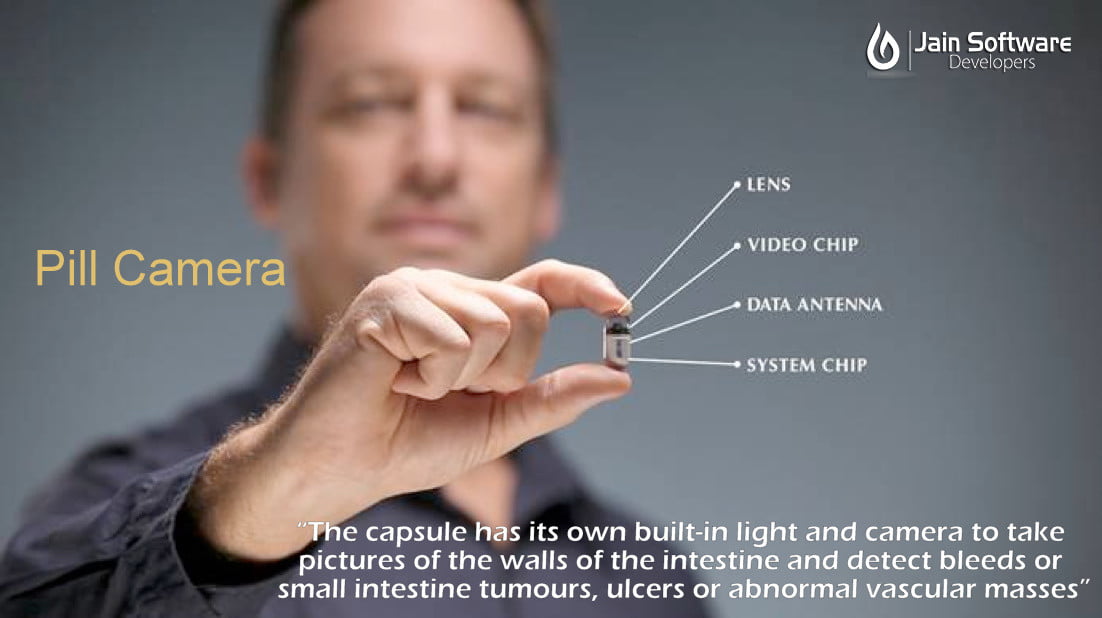
For detecting diagnosis a pill-sized video capsule is swallowed, which slowly travels through your intestine before being naturally excreted. The capsule has its own built-in light and camera to take pictures of the walls of the intestine and detect bleeds or small intestine tumors, ulcers or abnormal vascular masses. 2-4 images are taken per second for up to 8 hours. The images are transmitted to a recorder that is worn around the waist.

You may require this investigation if you have abnormal bleeding or are suspected to have Crohn’s disease. This investigation is non-invasive and allows doctors to examine all three portions of the small intestine

  • Duodenum,
  • Jejunum and
  • Ileum

which often cannot be reached by other imaging methods.
What is Capsule Endoscopy used for?

Capsule enteroscopy allows your doctor to visualize the small intestine which is often missed by conventional imaging methods such as upper gastrointestinal endoscopy or colonoscopy. The most common reason for ordering this investigation is to look for sources of bleeding. You may have noticed blood in yo ur vomit or faeces, or have unnoticed blood loss that can cause iron deficiency anaemia. This investigation can identify polyps, inflammatory intestine disease (Crohn’s disease or?ulcerative colitis), ulcers and tumors that may be the source of the bleeding. Such lesions may not have been found by previous investigations but once identified; your doctor can decide an appropriate course of management.

The other main use is for evaluating the extent of Crohn’s disease, which commonly affects the small intestine. This investigation is particularly useful for detecting early disease which may be missed by barium examination and CT. Also, it can be useful in patients who have symptoms which do not match the extent of disease (if any) seen by conventional imaging techniques.

Wireless capsule enteroscopy may have further indications in the future as it is safe, easy to perform, non-invasive and doesn’t require sedation. In particular, if techniques are invented that allow treatments or biopsies (tissue sampling) to be performed at the time of the procedure, it will become a very useful procedure.

It should be noted that this investigation may not always be the best for you. The images taken by the camera are of poorer quality than those obtained by upper gastrointestinal endoscopy or colonoscopy. In addition, the camera may move too fast or slow to examine or the appropriate areas or be facing the wrong way and miss some lesions. Thus, it is only one possibility?of a series of investigations you may require in order for your doctor to make a correct diagnosis.
How do you prepare for the procedure?

Prior to the procedure, your doctor will explain what the procedure involves, risks, benefits and why it is indicated in your case. You will need to fast (don’t eat or drink) for around 10 hours before the investigation, as it is safest and produces the best results when the intestine is empty.

No fluid is taken for at least 2 hours and no food for a further 4 hours after swallowing the capsule. Oral medications can be taken after 2 hours if required.

If you are diabetic, the medication must be stopped during the fasting period and insulin use should be discussed with your doctor.

There is usually no need for intestine preparation, but strong colored tablets (e.g. iron tablets) should be avoided for about 24hrs before the procedure.
What does the procedure involve?

For the procedure, you will be required to swallow a 26x11mm endoscopy capsule equipped with a video camera, light source, radio transmitter, and batteries. The capsule is swallowed with a substance called simethicone, to prevent bubbles forming and interfering with the images.

The capsule passes naturally through your body via peristalsis (contraction and propelled by the muscular walls of the gastrointestinal tract) while it takes many images. The images are detected by a sensor device attached to your abdomen with 8 small aerials taped to the skin (similar to the electrodes used for an ECG). These are recorded and stored on the image recorder worn around your waist.

After approximately 8 hours you will be required to return to the medical center so the images can be downloaded and examined on a computer monitor by the physician. Around 50,000 images will be taken per investigation, so it can take a long time for these to be examined and processed. Your doctor will normally inform you of the results within a week.

You should pass the capsule naturally after 8-72 hours, but it can sometimes take up to two weeks. If you haven’t passed the capsule by this time, an X-ray may need to be performed to see if it is still present or obstructed. The capsule is discarded after it has been excreted.
What are the risks?

Capsule enteroscopy is a safe procedure and is well tolerated by most patients. Less than 1 in 10 people have difficulty swallowing the capsule, which has a gel coating to help you swallow it.

The main risk is retention of the capsule, which occurs in about 1 in a hundred people. The capsule becomes impeded by a stricture (narrowing) secondary to a tumor, inflammation or scarring from previous surgery. It is not dangerous in the short term, but you may require a surgical intervention to remove it. Obstruction may present as bloating, vomiting or pain. You should consult your doctor promptly if you experience these symptoms. In most cases, the capsule will pass naturally from the body without any problems.


Artificial Eye

The Artificial Eye: A Marvel of Medical and Engineering Innovation

By Author – Rishabh Sontakke

An artificial eye is a prosthetic replacement for a natural eye lost due to injury, disease, or congenital conditions. While it does not restore vision, it serves an important cosmetic and psychological role, helping individuals regain confidence and a natural appearance. Modern artificial eyes are not only realistic in appearance but can also move in coordination with the natural eye, thanks to advanced surgical and material innovations.


The Evolution of Artificial Eyes

Before artificial eyes were developed, people who lost an eye often wore an eye patch to cover the empty socket. With progress in medical technology, ocular prosthetics emerged as a more aesthetic and functional solution.
Today, most artificial eyes are made from medical-grade plastic, offering durability and lifelike realism. The average lifespan of a prosthetic eye is about 10 years, although children require more frequent replacements due to growth changes. A child may need four to five prostheses from infancy to adulthood.

According to the Society for the Prevention of Blindness, between 10,000 and 12,000 people lose an eye each year. Around 50% or more of these losses result from accidents, with men being more affected than women. Other causes include congenital conditions such as:

  • Microphthalmia – a condition where the eye is abnormally small and often non-functional.

  • Anophthalmia – a rare birth defect where one or both eyes are absent.

  • Retinoblastoma – a hereditary eye cancer present at birth that may require surgical removal of the affected eye to save the patient’s life.


The Surgical Process of Eye Replacement

Replacing a natural eye with an artificial one involves two key surgical steps, performed by an ophthalmologist or ocular surgeon.

1. Enucleation

In this procedure, the entire eyeball is removed. The surgeon severs the muscles attached to the sclera (the white part of the eye) and cuts the optic nerve, carefully extracting the eyeball from the socket.

A spherical implant made of materials like plastic, silicone, or glass is then inserted into the socket to restore volume and movement.

2. Evisceration

Here, the contents of the eyeball are removed, but the sclera and eye muscles remain intact. A prosthetic ball is placed inside the eye cavity and the wound is closed, allowing for natural-looking eye movement.

3. Conformer Placement

A conformer, a small plastic disc, is placed in the socket to maintain its shape and prevent shrinking during healing. This ensures a proper fit for the future prosthesis. The healing process typically takes four to six weeks, after which a custom artificial eye is fitted.


Materials Used in Artificial Eyes

The manufacturing of an artificial eye involves a variety of specialized materials:

  • Plastic – the main component of the prosthesis.

  • Wax and Plaster of Paris – used to create detailed molds.

  • Alginate – a seaweed-derived white powder used in the molding process.

  • High-quality paints and coatings – used to replicate the natural iris, veins, and sclera texture.

Each eye is custom-made to match the patient’s natural eye color, shape, and size — making every prosthesis a unique work of art and science.


The Manufacturing Process

Creating an artificial eye requires both artistic skill and medical precision. The entire process typically takes about 3 to 4 hours, though it may vary depending on the patient and the ocularist’s method.

There are two primary types of artificial eyes:

  1. Shell Type: A thin prosthesis fitted over a damaged or disfigured natural eye.

  2. Full Impression Type: Designed for patients who have had their eyeball completely removed.

Steps Involved:

  1. Inspection: The ocularist examines the eye socket’s shape and condition.

  2. Iris Painting: The iris is hand-painted to perfectly match the patient’s existing eye.

  3. Wax Mold Creation: A wax shell is carved and fitted into the socket to achieve comfort and alignment.

  4. Impression Making: Alginate cream is used to create a precise impression of the socket.

  5. Casting: A plaster-of-Paris cast is made from the mold to shape the prosthesis.

  6. Plastic Forming: The final prosthesis is cast using medical-grade plastic with the painted iris embedded.

  7. Polishing and Fitting: The artificial eye is polished, fitted into the socket, and adjusted for comfort and natural movement.

The result is a lifelike prosthetic eye that closely matches the real one — restoring not sight, but dignity, confidence, and normal appearance.


Future of Artificial Eyes

The future of ocular prosthetics looks promising, blending biomedical engineering, electronics, and computing innovations. Research is already underway to create bionic eyes capable of partially restoring sight.

One groundbreaking invention was the Bio-Eye Implant, approved by the U.S. FDA in 1989. Made from hydroxyapatite, a material derived from ocean coral, it mimics the structure of human bone and allows better integration with surrounding tissues. Over 25,000 people worldwide have benefited from this technology, which provides improved movement and prevents socket complications.

Researchers at MIT and Harvard University are now developing an artificial retina that may one day restore limited vision. This involves a biochip that interfaces with the retina’s ganglion cells and communicates with an external infrared laser system through special glasses worn by the patient.

If successful, such advancements could bridge the gap between cosmetic prosthetics and functional vision restoration, transforming millions of lives worldwide.


Conclusion

The development of artificial eyes stands as a testament to the incredible fusion of medicine, art, and technology. From ancient glass prostheses to modern computer-assisted designs, artificial eyes have evolved far beyond aesthetics — offering comfort, mobility, and hope.

While today’s artificial eyes cannot restore sight, ongoing research in bionics, robotics, and neural engineering holds the promise of making that vision a reality in the future.
Until then, artificial eyes continue to reflect not just light — but the resilience of the human spirit.

Introduction to Java

Understanding Java: The Language That Changed Programming Forever

By Author – Rashmita Soge

Java is one of the most influential and widely used programming languages in the world today. Created by James Gosling at Sun Microsystems in 1991, Java was designed with a clear mission — write once, run anywhere. This meant that a program written in Java could run seamlessly across multiple operating systems without needing to be rewritten.

The first public version, Java 1.0, was launched in 1995, marking the beginning of a new era in software development. Later, in 2010, Oracle Corporation acquired Sun Microsystems and took over the stewardship of Java. To support the open-source community, Java was made available under the GNU General Public License (GPL), and Oracle continues to manage its open-source version through OpenJDK.
Today, one of the most popular versions in use is Java 8, known for its efficiency, simplicity, and powerful features.


What is Java?

Java is a general-purpose, class-based, and object-oriented programming language. It is platform-independent, meaning programs can run on any system that supports Java, without modification. Java is also secure, portable, multithreaded, dynamic, and robust, making it an ideal choice for a wide range of applications — from desktop and mobile apps to enterprise and web-based systems.

In essence, Java allows developers to write code once and execute it anywhere, providing unmatched flexibility in today’s multi-platform world.


A Brief History of Java

The journey of Java began when James Gosling and his team — Michael Sheridan and Patrick Naughton — started working on a project called Project Green in 1991. Their goal was to develop a programming language for smart appliances and interactive devices that could deliver high performance, security, and portability.

Initially, the language was named Oak, after the tree outside Gosling’s office. However, due to a trademark conflict, it was later renamed Java. The first version, Java 1.0a2, along with the HotJava browser, was released in 1995 — introducing the world to the power of platform-independent programming.

The team set out some core principles for Java, ensuring that it was:

  • Secure and reliable

  • High performing

  • Portable and architecture-neutral

  • Threaded, interpreted, and dynamic

  • Entirely object-oriented

Over time, Java became the foundation of enterprise software and web technologies, powering millions of applications globally.


How Java Works

To understand Java’s power, it’s important to look at how it functions differently from other languages.

In traditional languages like C or C++, the compiler generates machine-specific code. For instance, a C++ program compiled on Windows will not run on Linux without recompilation.

Java solves this problem through its Java Virtual Machine (JVM). When you write Java code, it is compiled into bytecode instead of platform-specific code. This bytecode runs on the JVM, which acts as an interpreter between the Java program and the underlying operating system.

This process ensures that the same Java program can run on any device or OS that has a JVM installed — whether it’s Windows, macOS, or Linux.
In short, Java follows a compile once, run anywhere model.


Key Features of Java

Here are some of the most important characteristics that make Java a preferred language among developers:

  1. Platform Independent – Java programs run on any device that supports the JVM.

  2. Object-Oriented – Everything in Java is treated as an object, allowing for modular, reusable, and flexible code.

  3. Strongly Typed – Java requires explicit data type declarations, reducing errors.

  4. Interpreted and Compiled – Java code is both compiled into bytecode and interpreted by the JVM for faster execution.

  5. Automatic Memory Management – The Java Garbage Collector automatically frees up memory by removing unused objects, making the process safer and more efficient.


The Future of Java

Despite being more than two decades old, Java remains one of the most relevant and in-demand programming languages in the world. The continuous updates and strong community support ensure it stays modern and capable.

The Apache Maven build automation tool, widely used in Java-based projects, proves that Java continues to evolve with modern development practices. With Oracle’s ongoing commitment to enhancing Java, newer versions keep introducing improvements in performance, scalability, and developer productivity.

Even with competition from newer languages like .NET, Python, and Kotlin, Java continues to dominate due to its stability, strong security features, and massive ecosystem of frameworks and libraries.

Java’s long history has made it a trusted choice for enterprise-level applications, Android development, and large-scale web systems. Its simplicity, combined with power and reliability, ensures that Java is not going anywhere — it will continue to be a vital part of the programming world for decades to come.


Conclusion

From its humble beginnings in the early 90s to becoming a global standard in software development, Java has proven its worth as a versatile, secure, and efficient programming language.
It not only changed how software is written but also how it is executed across diverse platforms. With continued innovation and community support, Java will remain a cornerstone of modern programming — empowering developers to build reliable, high-performance applications that shape the future of technology.

By Author – Rashmita Soge


Java is a programming language created by James Gosling from Sun Microsystems (Sun) in 1991. The target of Java is to write a program once and then run this program on multiple operating systems. The first publicly available version of Java (Java 1.0) was released in 1995. Sun Microsystems was acquired by the Oracle Corporation in 2010. Oracle has now the steermanship for Java. In 2006 Sun started to make Java available under the GNU General Public License (GPL). Oracle continues this project called OpenJDK. Over time new enhanced versions of Java have been released. The current version of Java is Java 1.8 which is also known as Java 8.

Java is defined by a specification and consists of a programming language, a compiler, core libraries and a runtime (Java virtual machine) The Java runtime allows software developers to write program code in other languages than the Java programming language which still runs on the Java virtual machine. The Java platform is usually associated with the Java virtual machine and the Java core libraries.

What is java?

Java is a General Purpose, class-based, object-oriented, Platform independent, portable, Architecturally neutral, multithreaded, dynamic, distributed, Portable and robust interpreted Programming Language.

It is intended to let application developers “write once, run anywhere” meaning that compiled Java code can run on all platforms that support Java without the need for

History of Java

Java is the brainchild of Java pioneer James Gosling, who traces Javas core idea of, Write Once, Run Anywhere back to work he did in graduate school.

After spending time at IBM, Gosling joined Sun Microsystems in 1984. In 1991, Gosling partnered with Sun colleagues, Michael Sheridan and Patrick Naughton on Project Green, to develop new technology for programming next-generation smart appliances. Gosling, Naughton, and Sheridan set out to develop the project based on certain rules. They were specifically tied to performance, security, and functionality. Those rules were that Java must be:

  1. Secure and robust
  2. High performance
  3. Portable and architecture-neutral, which means it can run on any combination of software and hardware
  4. Threaded, interpreted, and dynamic
  5. Object-oriented

Over time, the team added features and refinements that extended the heirloom of C++ and C, resulting in a new language called Oak, named after a tree outside Goslings office.

After efforts to use Oak for interactive television failed to materialize, the technology was re-targeted for the world wide web. The team also began working on a web browser as a demonstration platform.

Because of a trademark conflict, Oak was renamed, Java, and in 1995, Java 1.0a2, along with the browser, name HotJava, was released. The Java language was designed with the following properties:

  • Platform independent: Java programs use the Java virtual machine as abstraction and do not access the operating system directly. This makes Java programs highly portable. A Java program (which is standard-compliant and follows certain rules) can run unmodified on all supported platforms, e.g., Windows or Linux.
  • Object-orientated programming language: Except the primitive data types, all elements in Java are objects.
  • Strongly-typed programming language: Java is strongly-typed, e.g., the types of the used variables must be pre-defined and conversion to other objects is relatively strict, e.g., must be done in most cases by the programmer.
  • Interpreted and compiled language: Java source code is transferred into the bytecode format which does not depend on the target platform. These bytecode instructions will be interpreted by the Java Virtual machine (JVM). The JVM contains a so-called Hotspot-Compiler which translates performance critical bytecode instructions into native code instructions.
  • Automatic memory management: Java manages the memory allocation and de-allocation for creating new objects. The program does not have direct access to the memory. The so-called garbage collector automatically deletes objects to which no active pointer exists.

How Java Works?

To understand the primary advantage of Java, you’ll have to learn about platforms. In most programming languages, a compiler generates code that can execute on a specific target machine. For example, if you compile a C++ program on a Windows machine, the executable file can be copied to any other machine but it will only run on other Windows machines but never another machine. A platform is determined by the target machine along with its operating system. For earlier languages, language designers needed to create a specialized version of the compiler for every platform. If you wrote a program that you wanted to make available on multiple platforms, you, as the programmer, would have to do quite a bit of additional work.? You would have to create multiple versions of your source code for each platform.

Java succeeded in eliminating the platform issue for high-level programmers because it has reorganized the compile-link-execute sequence at an underlying level of the compiler. Details are complicated but, essentially, the designers of the Java language isolated those programming issues which are dependent on the platform and developed low-level means to abstractly refer to these issues. Consequently, the Java compiler doesn’t create an object file, but instead it creates a bytecode file which is, essentially, an object file for a virtual machine.? In fact, the Java compiler is often called the JVM compiler. To summarize how Java works, think about the compile-link-execute cycle. In earlier programming languages, the cycle is more closely defined as “compile-link then execute”. In Java, the cycle is closer to “compile then link-execute”.

Future of Java

Java is not a legacy programming language, despite its long history. The robust use of Maven, the building tool for Java-based projects, debunks the theory that Java is outdated. Although there are a variety of deployment tools on the market, Apache Maven has by far been one of the largest automation tools developers use to deploy software applications.

With Oracles commitment to Java for the long haul, its not hard to see why Java will always be a part of programming languages for years to come and will remain as the chosen programming language. 2017 will see the release of the eighth version of Java-Java EE 8.

Despite its areas for improvement, and threat from rival programming languages like.NET, Java is here to stay. Oracle has plans for a new version release in the early part of 2017, with new supportive features that will strongly appeal to developers. Javas multitude of strengths as a programming language means its use in the digital world will only solidify. A language that was inherently designed for easy use has proved itself as functional and secure over the course of more than two decades. Developers who appreciate technological changes can also rest assured the tried-and-true language of Java will likely always have a significant place in their toolset.

ReactJS

What is React?

React is a front-end library developed by Facebook. It is used for handling the view layer for web and mobile apps.

React is a library for building composable user interfaces. It encourages the creation of reusable UI components, which present data that changes over time. Lots of people use React to the V in MVC (Model View Controller). React abstracts away the DOM (Document Object Model) from you, offering a simpler programming model and better performance. React can also render on the server using Node, and it can power native apps using React Native. React implements one-way reactive data flow, which reduces the boilerplate and is easier to reason about than traditional data binding.

What is ReactJS?

ReactJS allows us to create reusable UI components. It is currently one of the most popular JavaScript libraries and has a strong foundation and large community behind it.

If you want to work with ReactJS, you need to have solid knowledge of?JavaScript, HTML5, and?CSS. Even though ReactJS doesn’t use HTML, the JSX is similar so your HTML knowledge will be very helpful.

Capabilities of ReactJS:-

  • JSX JSX is JavaScript syntax extension. It isn’t necessary to use JSX in React development, but it is recommended.
  • Components React is all about components. One need to think of everything as a component. This will help maintain the code when working on larger scale projects.
  • Unidirectional data flow and Flux React implements one-way data flow which makes it easy to reason about the app. Flux is a pattern that helps to keep your data unidirectional.
  • License React is licensed under the Facebook Inc. Documentation is licensed under CC BY 4.0.

Advantages of ReactJS:-

?

Adaptability

One of the most heartwarming features of React JS is its adaptability. What makes react perfectly is the capacity to get adopted with ease and convenience. Because of the short list of lifecycle approaches, this is very easy to understand and use. With the advent of ES2015 and ES2016, a more functional and user-friendly programming has become a cyber norm and render function of React JS makes it easy for React JS to comply with a user-friendly and functional programming style.

Usefulness of JSX
The separation of HTML from Java is still a hot debate among programmers. The makers of React JS believe that this separation is indeed a very shallow one as both of them were very well integrated. Thus they introduce JSX and React JS features make it very easy because JSX makes the reasoning of a module easier than ever.

?Free and OpenSource
If a software is free and it is open source, there is needless to say that it is going to be the new favorite of programmers and relevant community. React JS usage is although subject to the curation by Facebooks developers, it is still free and open source, which gives you a chance to get codes developed by elite and most enthusiastic developers.

?SCMA Script
Programmer community believes that React JS features will touch new heights because of the availability of ECMAScipt6 and 7. While the latter is still in progress, its features are being used by big-shot libraries. With help of any good ES transpiler, you can use these stunning features.

?Decorators from ES7
As it has been mentioned before, you do not need to wait for the ES7 features being supported by the Internet Explorer; you can use a transpiler for that. Decorators are one of the most useful features of React JS and they allow you to augment a functions behavior by simply wrapping that in a different function.

Server-side Communication
One of the main reasons why people expect a mass use of React JS is because of React JS features like server-side communication. The library of React JS empowers the programmers by giving them lifecycle hooks to enable the service requests. With help of this feature, you understand the mechanism of XHR requests and thus easily update your library to use them.

Light Railing for Applications
React JS is being used by different companies, developers, and programmers, but one reason why every IT company should consider React JS features, is its lifecycle methods, state and props capacity to provide enough railing to create useful apps. This railing, however, would not smother the free use of different libraries.

Asynchronous Functions & Generators
One of the main reasons for the immense React JS usage is the asynchronous functions and generators offered by ES6. The freedom to pause and resume the execution of a JavaScript function makes these generators popular among developers and programmers.

Flux Library
Like it has been said, React JS is actually a library made of Java scripts. Flux is one of the best libraries that complement React JS and make it very easy for the programmers to manage data across the whole application.

Destructuring Assignments
In ES6, Destructuring Assignments were introduced to the programmers. They allow the programmers to bring a compound object on the left side of an assignment. Having such an amazing feature, one can save some keystrokes and also load only a subset of a required module.
Out verdict goes in favor of React JS and considering very useful features that React JS introduces to the community, we can predict that React JS features will only make it skyrocket in the coming years.

Disadvantages of ReactJS

  1. The high pace of development:?The environment constantly changes, and developers must regularly relearn the new ways of doing things. Everything is evolving, and some developers are not comfortable with keeping up with such a pace.
  2. Poor documentation:?The problem with documentation traces back to constant releases of new tools. Different and new libraries like Redux and Reflux are promising to accelerate the work of a library or improve the entire React ecosystem. Developers struggle with integrating these tools with ReactJS.

Some members of the community think that React technologies are updating and accelerating so fast that there is no time to write proper instruction.

?HTML in my JavaScript!???JSX as a barrier

ReactJS uses?JSX. Some members of the development community consider JSX to be a serious disadvantage. Developers and designers complain about JSXs complexity and consequent steep learning curve.

React isn’t a framework

The looseness with which React can be employed is great for experimentation but challenging when you’re trying to do things the?right?way. Knowing there isn’t one yet will save you some time here.

Introduction of Ruby

Ruby Programming Language: Simplicity, Power, and Future Potential

Introduction

Ruby is an object-oriented, open-source programming language designed with simplicity and productivity in mind. It offers an elegant, human-friendly syntax that is easy to read and write. Ruby comes with a rich core library and a powerful API, making it one of the most versatile and developer-friendly languages in the programming world.

Inspired by languages like Lisp, Smalltalk, and Perl, Ruby combines the flexibility of scripting languages with the structure of object-oriented design. It’s easy for programmers familiar with C or Java to learn Ruby quickly because of its logical and readable syntax.

Developed primarily on Linux, Ruby is cross-platform, working efficiently across UNIX, Windows, macOS, BeOS, and OS/2. Its simplicity allows developers to focus more on solving problems rather than struggling with complex syntax.


History of Ruby

Ruby was developed by Yukihiro Matsumoto, often called Matz, in 1993. He wanted to create a programming language that balanced functional and imperative programming — simple yet powerful.

According to Matsumoto, Ruby’s core design was inspired by Lisp’s simplicity, Smalltalk’s object system, and Perl’s practicality. He envisioned a language that would make programming both productive and enjoyable.

The name “Ruby” was chosen during an online chat between Matsumoto and Keiju Ishitsuka on February 24, 1993. Two names were proposed — Coral and Ruby. Matsumoto selected Ruby, inspired by the birthstone of one of his colleagues.

The language officially appeared in 1995, and its popularity grew rapidly due to its ease of use and strong web development capabilities.

Ruby was particularly designed for web-related tasks — dynamically generating pages, managing databases, and interacting with web servers and browsers. Its general-purpose design, however, makes it suitable for a wide range of applications, much like Python and Perl.

At its heart, Ruby emphasizes developer happiness, ease of use, and clean, intuitive code — making it an ideal language for both beginners and experienced programmers.


Why Ruby Stands Out

1. Feature-Rich Language

Ruby combines the best ideas from several programming languages — both dynamic and strongly-typed. Its object-oriented paradigm helps developers achieve more with less code. The result is clean, structured, and easily maintainable software that encourages experimentation and reuse.

2. Open Source and Community Driven

Ruby is completely open source, and its global community is one of its strongest assets. The Ruby community is known for being active, supportive, and creative. Developers around the world continuously improve libraries, frameworks, and tools to make Ruby more capable and enjoyable.

3. Code-Based Data Model

In Ruby on Rails — the most famous Ruby framework — the data model is defined in code. After the initial model is created, developers can modify and manage it through migration scripts. This makes Ruby development flexible and scalable.

4. Excellent Documentation and Resources

Ruby is exceptionally well-documented. The internet is filled with tutorials, guides, and video courses — many of which are free. These resources, along with large online forums and communities, make it easy for developers to find help and learn faster.

5. Wide Range of Development Tools

Ruby offers a simple yet powerful ecosystem. Developers can choose from several Integrated Development Environments (IDEs) and open-source tools for coding, debugging, and deployment. The language’s ecosystem ensures that every development need — from database management to automation — can be met efficiently.

6. Rapid Development with Ruby on Rails

Ruby on Rails follows the philosophy of “Convention over Configuration.” This means that once you learn the Ruby way of doing things, the framework automates much of the repetitive work for you. This leads to faster development, fewer errors, and greater productivity — especially in web applications.

7. Advantages Over PHP

Ruby offers several advantages compared to older web languages like PHP. While PHP allows flexibility, it often leads to inconsistent code. Ruby, on the other hand, enforces structure and clean syntax, reducing bugs and simplifying maintenance. Developers often find Ruby more enjoyable and efficient for building scalable, maintainable applications.


The Future of Ruby

Ruby’s future remains bright thanks to its clean design philosophy and strong developer community. While newer languages continue to emerge, Ruby maintains a loyal following in web development, automation, and prototyping.

Frameworks like Ruby on Rails continue to evolve, ensuring that Ruby remains relevant in modern web development. Its ability to balance simplicity, power, and productivity ensures that it will stay a preferred choice for developers seeking fast, maintainable, and human-friendly code.


Conclusion

Ruby is more than just a programming language — it’s a philosophy that values developer happiness and elegant simplicity. From startups to large-scale enterprise applications, Ruby continues to empower developers around the world to build smarter and faster.

If you’re new to programming or looking to boost your productivity, Ruby is one of the best languages to start with. Its strong community, clean syntax, and robust framework support make it a true gem in the world of programming.

Introduction to Blockchain

What is a blockchain?

A blockchain is a decentralized library and a way of doing transactions of the cryptocurrencies like bitcoin and ethereum. ?The blockchain is actually a continuously growing list of records called blocks and each block contains a cryptographic hash of the previous block, a timestamp and transaction data. This way, Cryptocurrencies like Bitcoin wallets can calculate their spendable balance and new transactions can be verified to be spending bitcoins that are actually owned by the spender.


History of Blockchain

The first blockchain was conceptualized and made by a person known as?Satoshi Nakamoto?in 2008. Satoshi Nakamoto is the person who evolved this concept and connected as the core component with cryptocurrency bitcoin where it serves as the public ledger for all transactions on the network. ?Through the use of a blockchain, bitcoin became the first digital currency to the solved double-spending problem without requiring a trusted authority.


Working of Blockchain?

Blockchain ensures that the money is transferred immediately. No banking channels are used and the money will be liquid able on major crypto exchanges. Transaction?done is a transfer of value between?Bitcoin wallets that gets included in the blockchain.?Bitcoin?wallets keep a secret piece of data called a private key or seed, which is used to sign?transactions, providing a mathematical proof that they have come from the owner of the wallet.

The blockchain implementations could be broadly categorized into two categories based on the requirements of business use cases:

  • Public: A public blockchain is open and anyone can take part in executing the transactions on the network.
  • Private: A private blockchain is closed and is restricted to invite-based participation.


How is blockchain helpful?

The blockchain is now integrated into multiple areas solely becoming the next big thing

  • Decentralization of the technology.
  • Blockchain records and validate each and every transaction made, which makes it secure and reliable.
  • All the transactions made are authorized by miners, which makes the transactions immutable and prevent it from the threat of hacking.
  • Blockchain technology avoids the need of any third-party or any of the central authority for peer-to-peer transactions.


Future of blockchain

Blockchain will be adopted by central banks, industries, governments and cryptographically secured currencies will become widely used. As blockchain minimizes the cyber risk it will be helpful in future as in now. Blockchain technology could be used to distribute social welfare in developing nations also.


Smart Home Technology

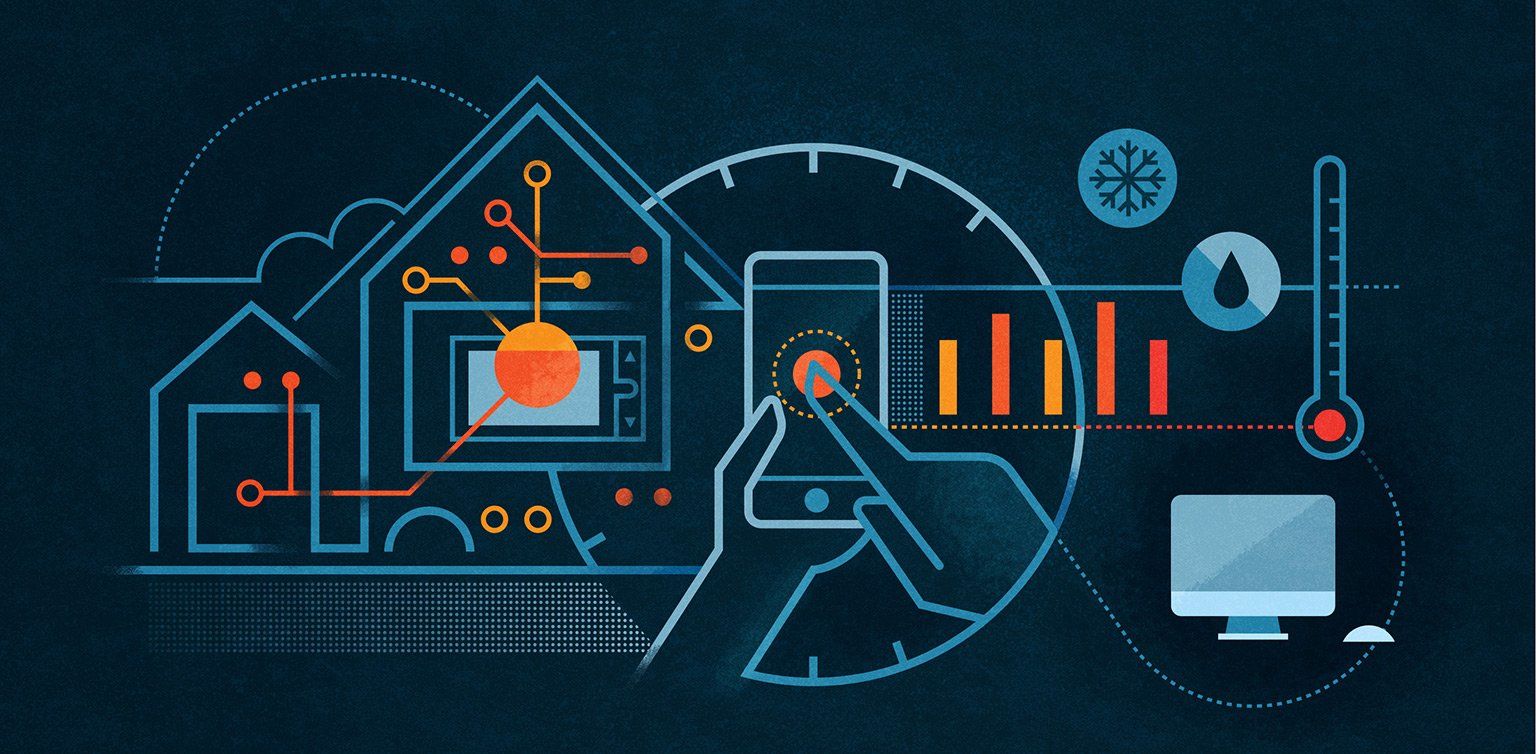
Smart-Home Technology benefits the home-owners to monitor their Houses remotely, countering dangers such as a forgotten coffee maker left on or a front door left unlocked.

Smart homes are also beneficial for the elderly, providing monitoring that can help seniors to remain at home comfortably and safely, rather than moving to a nursing home or requiring 24/7 home care.

Unsurprisingly, smart homes can accommodate user preferences. For example, as soon as you arrive home, your garage door will open, the lights will go on, the fireplace will roar and your favorite tunes will start playing on your smart speakers.


Home automation also helps consumers improve efficiency. Instead of leaving the air conditioning on all day, a smart home system can learn your behaviors and make sure the house is cooled down by the time you arrive home from work. The same goes for appliances. And with a smart irrigation system, your lawn will only be watered when needed and with the exact amount of water necessary. With home automation, energy, water and other resources are used more efficiently, which helps save both natural resources and money for the consumer.

However, home automation systems have struggled to become mainstream, in part due to their technical nature. A drawback of smart homes is their perceived complexity; some people have difficulty with technology or will give up on it with the first annoyance. Smart home manufacturers and alliances are working on reducing complexity and improving the user experience to make it enjoyable and beneficial for users of all types and technical levels.

For home automation systems to be truly effective, devices must be inter-operable regardless of who manufactured them, using the same protocol or, at least, complementary ones. As it is such a nascent market, there is no gold standard for home automation yet. However, standard alliances are partnering with manufacturers and protocols to ensure inter-operability and a seamless user experience.

Intelligence is the ability to adapt to change.”

Stephan Hawking


How smart homes work/smart home implementation

Newly built homes are often constructed with smart home infrastructure in place. Older homes, on the other hand, can be retrofitted with smart technologies. While many smart home systems still run on X10 or Insteon, Bluetooth and Wi-Fi have grown in popularity.

Zigbee and Z-Wave are two of the most common home automation communications protocols in use today. Both mesh network technologies, they use short-range, low-power radio signals to connect smart home systems. Though both target the same smart home applications, Z-Wave has a range of 30 meters to Zigbee’s 10 meters, with Zigbee often perceived as the more complex of the two. Zigbee chips are available from multiple companies, while Z-Wave chips are only available from Sigma Designs.

A smart home is not disparate smart devices and appliances, but ones that work together to create a remotely controllable network. All devices are controlled by a master home automation controller, often called a smart home hub. The smart home hub is a hardware device that acts as the central point of the smart home system and is able to sense, process data and communicate wirelessly. It combines all of the disparate apps into a single smart home app that can be controlled remotely by homeowners. Examples of smart home hubs include Amazon Echo, Google Home, Insteon Hub Pro, Samsung SmartThings and Wink Hub, among others.

Some smart home systems can be created from scratch, for example, using a Raspberry Pi or other prototyping board. Others can be purchased as a bundled?smart home kit also known as a smart home platform that contains the pieces needed to start a home automation project.

In simple smart home scenarios, events can be timed or triggered. Timed events are based on a clock, for example, lowering the blinds at 6:00 p.m., while triggered events depend on actions in the automated system; for example, when the owner’s smartphone approaches the door, the smart lock unlocks and the smart lights go on.

It involves the control and automation of lighting, heating (such as smart thermostats), ventilation, air conditioning (HVAC), and security (such as smart locks), as well as home appliances such as washer/dryers, ovens or refrigerators/freezers.WiFi is often used for remote monitoring and control. Home devices, when remotely monitored and controlled via the Internet, are an important constituent of the Internet of Things. Modern systems generally consist of switches and sensors connected to a central hub sometimes called a “gateway” from which the system is controlled with a user interface that is interacted either with a wall-mounted terminal, mobile phone software,tablet computer or a web interface, often but not always via Internet cloud services.

While there are many competing vendors, there are very few worldwide accepted industry standards and the smart home space is heavily fragmented. Manufacturers often prevent independent implementations by withholding documentation and by litigation.


Artificial Intelligence – decoding your scenes

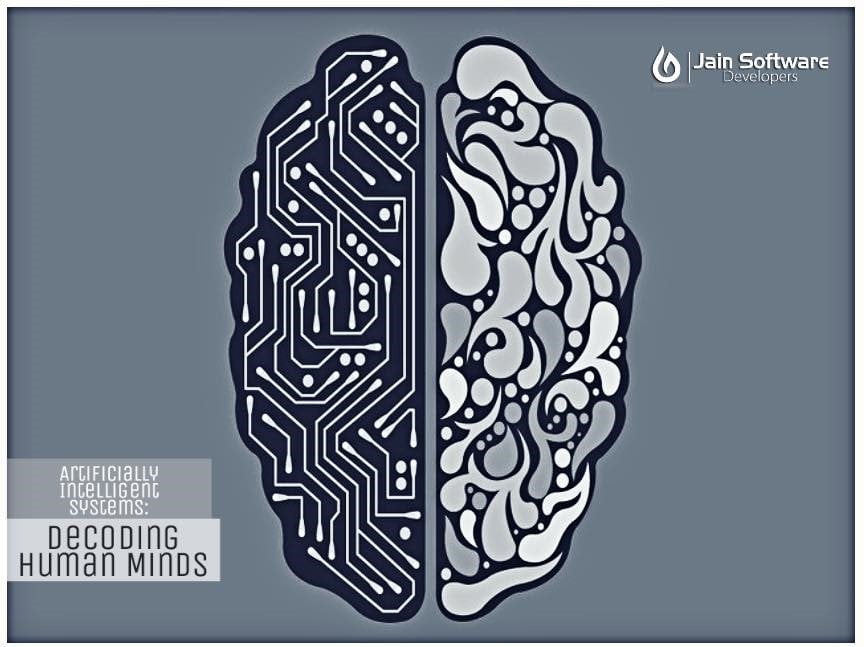
A new Artificial Intelligence system that can decode the human mind and interpret what a person is seeing by analyzing brain scans. The advance could aid efforts to improve artificial intelligence (AI) and lead to new insights into brain function. Critical to the research is a type of algorithm called a convolutional neural network, which has been instrumental in enabling computers and smartphones to recognize faces and objects. Convolutional neural networks, a form of “deep-learning” algorithm, have been used to study how the brain processes static images and other visual stimuli.

This is the first time such an approach has been used to see how the brain processes movies of natural scenes – a step towards decoding the brain while people are trying to make sense of complex and dynamic visual surroundings. The researchers acquired 11.5 hours of Functional magnetic resonance imaging (FMRI) data from each of the three women subjects watching 972 video clips, including those showing people or animals in action and nature scenes. The data was used to train the system to predict the activity in the brain’s visual cortex while the subjects were watching the videos. The model was then used to decode FMRI data from the subjects to reconstruct the videos, even ones the model had never watched before. The model was able to accurately decode the FMRI data into specific image categories. Actual video images were then presented side-by-side with the computer’s interpretation of what the person’s brain saw based on FMRI data. By doing that, we can see how the brain divides a visual scene into pieces, and re-assembles the pieces into a full understanding of the visual scene. This is how the actual decoding of the human brain is stimulated.

5G Wireless Systems

5G technology is going to be a new mobile revolution in technological market. Through 5G technology now you can use worldwide cellular phones. With the coming out of cell phone alike to PDA now your whole office is in your finger tips or in your phone. 5G technology has extraordinary data capabilities and has ability to tie together unrestricted call volumes and infinite data broadcast within latest mobile operating system. 5G technology has a bright future because it can handle best technologies and offer priceless handset to their customers. May be in coming days 5G technology takes over the world market.

5G Technologies have an extraordinary capability to support Software and Consultancy. The Router and switch technology used in 5G network provides high connectivity. The 5G technology distributes internet access to nodes within the building and can be deployed with union of wired or wireless network connections. The current trend of 5G technology has a glowing future.

The 5G terminals will have software defined radios and modulation schemes as well as new error-control schemes that can be downloaded from the Internet. The development is seen towards the user terminals as a focus of the 5G mobile networks. The terminals will have access to different wireless technologies at the same time and the terminal should be able to combine different flows from different technologies. The vertical handovers should be avoided, because they are not feasible in a case when there are many technologies and many operators and service providers. In 5G, each network will be responsible for handling user-mobility, while the terminal will make the final choice among different wireless/mobile access network providers for a given service. Such choice will be based on open intelligent middleware in the mobile phone.


While 5G isn’t expected until 2020, an increasing number of companies are investing now to prepare for the new mobile wireless standard. We explore 5G, how it works and its impact on future wireless systems.


According to the Next Generation Mobile Network’s 5G white paper, 5G connections must be based on ‘user experience, system performance, enhanced services, business models and management & operations’.


And according to the Group Special Mobile Association (GSMA) to qualify for a 5G a connection should meet most of these eight criteria:

  1. One to 10Gbps connections to end points in the field
  2. One millisecond end-to-end round trip delay
  3. 1000x bandwidth per unit area
  4. 10 to 100x number of connected devices
  5. (Perception of) 99.999 percent availability
  6. (Perception of) 100 percent coverage
  7. 90 percent reduction in network energy usage
  8. Up to ten-year battery life for low power, machine-type devices

Previous generations like 3G were a breakthrough in communications. 3G receives a signal from the nearest phone tower and is used for phone calls, messaging and data.

4G works the same as 3G but with a faster internet connection and a lower latency (the time between cause and effect).


Like all the previous Generations,5G will be significantly faster than its predecessor 4G.

This should allow for higher productivity across all capable devices with a theoretical download speed of 10,000 Mbps.

“Current 4G mobile standards have the potential to provide 100s of Mbps. 5G offers to take that into multi-gigabits per second, giving rise to the Gigabit Smartphone and hopefully a slew of innovative services and applications that truly need the type of connectivity that only 5G can offer,” says Paul Gainham, senior director, SP Marketing EMEA at Juniper Networks.

Plus, with greater bandwidth comes faster download speeds and the ability to run more complex mobile internet apps.


The future of 5G

As 5G is still in development, it is not yet open for use by anyone. However, lots of companies have started creating 5G products and field testing them.

Notable advancements in 5G technologies have come from Nokia, Qualcomm, Samsung, Ericsson and BT, with growing numbers of companies forming 5G partnerships and pledging money to continue to research into 5G and its application.

Qualcomm and Samsung have focused their 5G efforts on hardware, with Qualcomm creating a 5G modem and Samsung producing a 5G enabled home router.

Both Nokia and Ericcson have created 5G platforms aimed at mobile carriers rather than consumers.Ericsson created the first 5G platform earlier this year that claims to provide the first 5G radio system. Ericsson began 5G testing in 2015.

Who is investing in 5G?


Both Nokia and Ericcson have created 5G platforms aimed at mobile carriers rather than consumers.Ericsson created the first 5G platform earlier last year that claims to provide the first 5G radio system, although it has begun 5G testing in 2015.

Similarly, in early 2017, Nokia launched “5G First”, a platform aiming to provide end-to-end 5G support for mobile carriers.

Looking closer to home, the City of London turned on its district-wide public Wi-Fi network in October 2017, consisting of 400 small cell transmitters. The City plans to run 5G trials on it.

Chancellor Philip Hammond revealed in the Budget 2017 that the government will pledge 16 million to create a 5G hub. However, given the rollout of 4G, it’s unknown what rate 5G will advance at.

Request a Free Estimate
Enter Your Information below and we will get back to you with an estimate within few hours
0