Official Blog

4G Wi-Fi Revolution

Wi-Fi is an extremely powerful resource that connects people, business, and increasingly the Internet of Things. It is used in our homes, colleges, businesses, favorite cafes, buses, and many of our public spaces. However, it is also a hugely complex technology. Designing, deploying, and maintaining a successful WLAN is no easy task, the goal is to make that task easier for WLAN administrators of all skill levels through education, knowledge-sharing, and community participation etc.
Any malls, restaurants, hotel, and any other service station, Wi-Fi seems to be active. While supplemental downlink channels are 20MHZ, each the Wi-Fi channels could be 20MHz, 40MHz, 80MHz or even 160MHz. On many moments I had to switch off my Wi-Fi as the speed so poor & and go back to using 4G.
On my smartphone, most days I get 30/40mbps download speed and it works perfectly superb for all my needs. The only one reason that we would need higher speeds is to do a chain and use the laptop for work, watching a video, play games, listen to music, download anything that you want. Most of the people I know that they work with don’t require gigabit speed at the moment.
Once a user that is receiving high-speed data on their device using LTE-U / LAA creates a Wi-Fi hotspot, it may use the same 5GHZ channels as the once that the network is using for supplemental downlink. The user always asking why their download speed fall as soon as they switch WI-FI on.
The fact is that in a rural area & even general built-up areas, operates do not have to worry about the network being overloaded and use their licensed range. nobody is planning to place LTE-U / LAA in these areas. In the dense area and ultra areas, there are many more users, and many more wi-fi access points, ad-hoc wi-fi networks and many other sources of involvement.

Introduction to Blockchain

What is a blockchain?

A blockchain is a decentralized library and a way of doing transactions of the cryptocurrencies like bitcoin and ethereum. ?The blockchain is actually a continuously growing list of records called blocks and each block contains a cryptographic hash of the previous block, a timestamp and transaction data. This way, Cryptocurrencies like Bitcoin wallets can calculate their spendable balance and new transactions can be verified to be spending bitcoins that are actually owned by the spender.


History of Blockchain

The first blockchain was conceptualized and made by a person known as?Satoshi Nakamoto?in 2008. Satoshi Nakamoto is the person who evolved this concept and connected as the core component with cryptocurrency bitcoin where it serves as the public ledger for all transactions on the network. ?Through the use of a blockchain, bitcoin became the first digital currency to the solved double-spending problem without requiring a trusted authority.


Working of Blockchain?

Blockchain ensures that the money is transferred immediately. No banking channels are used and the money will be liquid able on major crypto exchanges. Transaction?done is a transfer of value between?Bitcoin wallets that gets included in the blockchain.?Bitcoin?wallets keep a secret piece of data called a private key or seed, which is used to sign?transactions, providing a mathematical proof that they have come from the owner of the wallet.

The blockchain implementations could be broadly categorized into two categories based on the requirements of business use cases:

  • Public: A public blockchain is open and anyone can take part in executing the transactions on the network.
  • Private: A private blockchain is closed and is restricted to invite-based participation.


How is blockchain helpful?

The blockchain is now integrated into multiple areas solely becoming the next big thing

  • Decentralization of the technology.
  • Blockchain records and validate each and every transaction made, which makes it secure and reliable.
  • All the transactions made are authorized by miners, which makes the transactions immutable and prevent it from the threat of hacking.
  • Blockchain technology avoids the need of any third-party or any of the central authority for peer-to-peer transactions.


Future of blockchain

Blockchain will be adopted by central banks, industries, governments and cryptographically secured currencies will become widely used. As blockchain minimizes the cyber risk it will be helpful in future as in now. Blockchain technology could be used to distribute social welfare in developing nations also.


Smart Home Technology

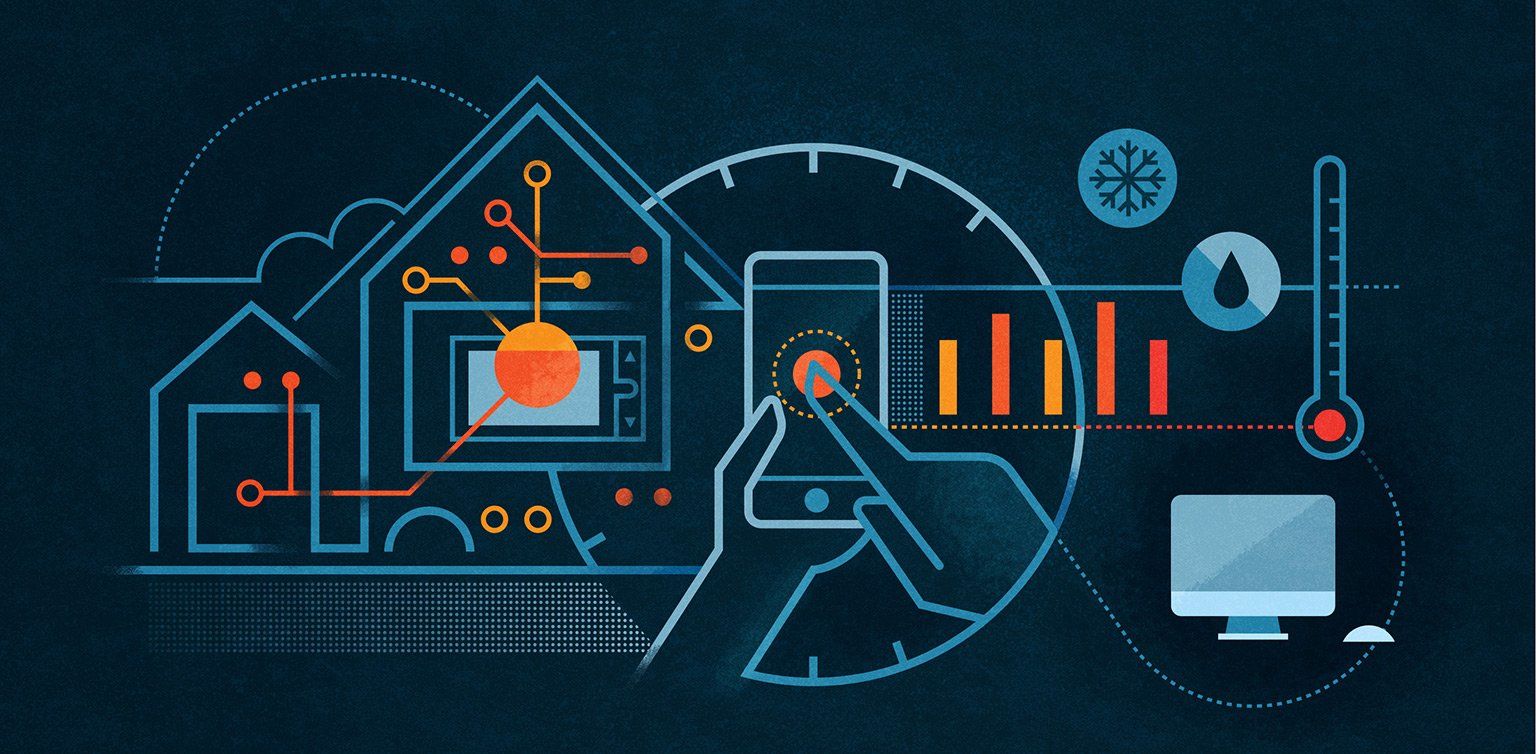
Smart-Home Technology benefits the home-owners to monitor their Houses remotely, countering dangers such as a forgotten coffee maker left on or a front door left unlocked.

Smart homes are also beneficial for the elderly, providing monitoring that can help seniors to remain at home comfortably and safely, rather than moving to a nursing home or requiring 24/7 home care.

Unsurprisingly, smart homes can accommodate user preferences. For example, as soon as you arrive home, your garage door will open, the lights will go on, the fireplace will roar and your favorite tunes will start playing on your smart speakers.


Home automation also helps consumers improve efficiency. Instead of leaving the air conditioning on all day, a smart home system can learn your behaviors and make sure the house is cooled down by the time you arrive home from work. The same goes for appliances. And with a smart irrigation system, your lawn will only be watered when needed and with the exact amount of water necessary. With home automation, energy, water and other resources are used more efficiently, which helps save both natural resources and money for the consumer.

However, home automation systems have struggled to become mainstream, in part due to their technical nature. A drawback of smart homes is their perceived complexity; some people have difficulty with technology or will give up on it with the first annoyance. Smart home manufacturers and alliances are working on reducing complexity and improving the user experience to make it enjoyable and beneficial for users of all types and technical levels.

For home automation systems to be truly effective, devices must be inter-operable regardless of who manufactured them, using the same protocol or, at least, complementary ones. As it is such a nascent market, there is no gold standard for home automation yet. However, standard alliances are partnering with manufacturers and protocols to ensure inter-operability and a seamless user experience.

Intelligence is the ability to adapt to change.”

Stephan Hawking


How smart homes work/smart home implementation

Newly built homes are often constructed with smart home infrastructure in place. Older homes, on the other hand, can be retrofitted with smart technologies. While many smart home systems still run on X10 or Insteon, Bluetooth and Wi-Fi have grown in popularity.

Zigbee and Z-Wave are two of the most common home automation communications protocols in use today. Both mesh network technologies, they use short-range, low-power radio signals to connect smart home systems. Though both target the same smart home applications, Z-Wave has a range of 30 meters to Zigbee’s 10 meters, with Zigbee often perceived as the more complex of the two. Zigbee chips are available from multiple companies, while Z-Wave chips are only available from Sigma Designs.

A smart home is not disparate smart devices and appliances, but ones that work together to create a remotely controllable network. All devices are controlled by a master home automation controller, often called a smart home hub. The smart home hub is a hardware device that acts as the central point of the smart home system and is able to sense, process data and communicate wirelessly. It combines all of the disparate apps into a single smart home app that can be controlled remotely by homeowners. Examples of smart home hubs include Amazon Echo, Google Home, Insteon Hub Pro, Samsung SmartThings and Wink Hub, among others.

Some smart home systems can be created from scratch, for example, using a Raspberry Pi or other prototyping board. Others can be purchased as a bundled?smart home kit also known as a smart home platform that contains the pieces needed to start a home automation project.

In simple smart home scenarios, events can be timed or triggered. Timed events are based on a clock, for example, lowering the blinds at 6:00 p.m., while triggered events depend on actions in the automated system; for example, when the owner’s smartphone approaches the door, the smart lock unlocks and the smart lights go on.

It involves the control and automation of lighting, heating (such as smart thermostats), ventilation, air conditioning (HVAC), and security (such as smart locks), as well as home appliances such as washer/dryers, ovens or refrigerators/freezers.WiFi is often used for remote monitoring and control. Home devices, when remotely monitored and controlled via the Internet, are an important constituent of the Internet of Things. Modern systems generally consist of switches and sensors connected to a central hub sometimes called a “gateway” from which the system is controlled with a user interface that is interacted either with a wall-mounted terminal, mobile phone software,tablet computer or a web interface, often but not always via Internet cloud services.

While there are many competing vendors, there are very few worldwide accepted industry standards and the smart home space is heavily fragmented. Manufacturers often prevent independent implementations by withholding documentation and by litigation.


 

Artificial Intelligence – decoding your scenes

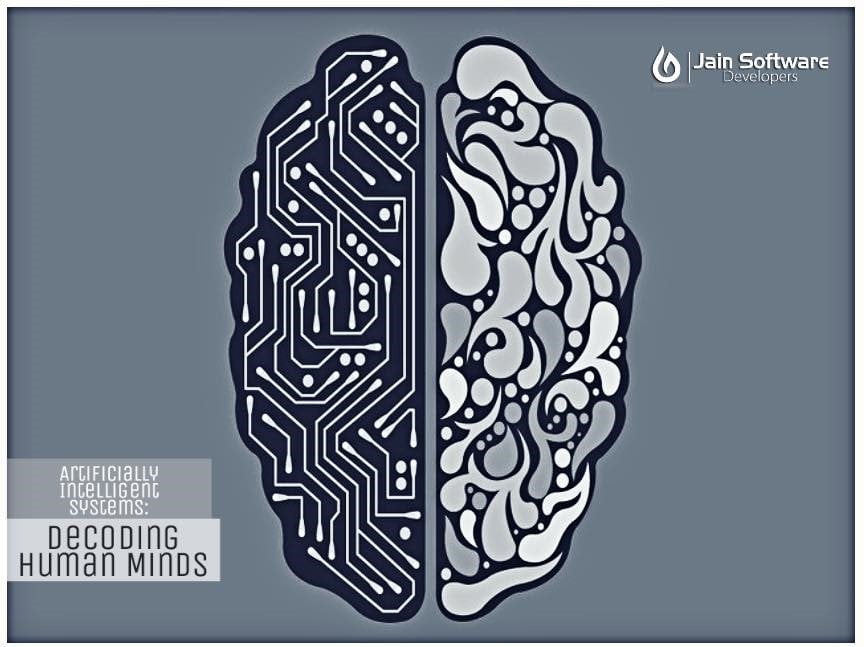
A new Artificial Intelligence system that can decode the human mind and interpret what a person is seeing by analyzing brain scans. The advance could aid efforts to improve artificial intelligence (AI) and lead to new insights into brain function. Critical to the research is a type of algorithm called a convolutional neural network, which has been instrumental in enabling computers and smartphones to recognize faces and objects. Convolutional neural networks, a form of “deep-learning” algorithm, have been used to study how the brain processes static images and other visual stimuli.

This is the first time such an approach has been used to see how the brain processes movies of natural scenes – a step towards decoding the brain while people are trying to make sense of complex and dynamic visual surroundings. The researchers acquired 11.5 hours of Functional magnetic resonance imaging (FMRI) data from each of the three women subjects watching 972 video clips, including those showing people or animals in action and nature scenes. The data was used to train the system to predict the activity in the brain’s visual cortex while the subjects were watching the videos. The model was then used to decode FMRI data from the subjects to reconstruct the videos, even ones the model had never watched before. The model was able to accurately decode the FMRI data into specific image categories. Actual video images were then presented side-by-side with the computer’s interpretation of what the person’s brain saw based on FMRI data. By doing that, we can see how the brain divides a visual scene into pieces, and re-assembles the pieces into a full understanding of the visual scene. This is how the actual decoding of the human brain is stimulated.

Eye Ring

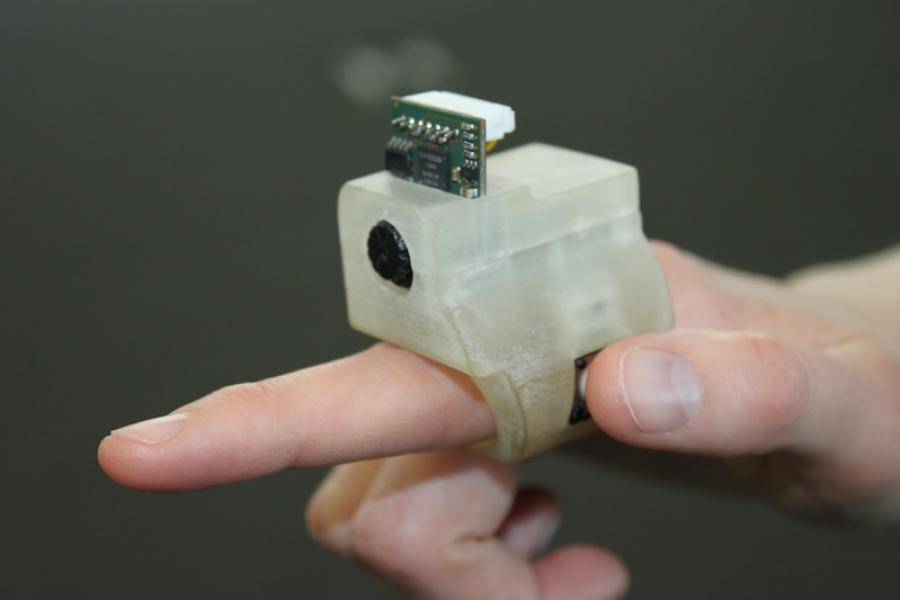
EyeRing is a wearable interface that allows using a pointing gesture or touching to access digital information about objects and the world. The idea of a micro camera worn as a ring on the index finger started as an experimental assistive technology for visually impaired persons, however soon enough we realized the potential for assistive interaction throughout the usability spectrum to children and visually-able adults as well.With a button on the side, which can be pushed with the thumb, the ring takes a picture or a video that is sent wirelessly to a mobile.

A computation element embodied as a mobile phone is in turn accompanied by the earpiece for information loopback. The finger-worn device is autonomous and wireless. A single button initiates the interaction. Information transferred to the phone is processed, and the results are transmitted to the headset for the user to hear.

Several videos about EyeRing have been made, one of which shows a visually impaired person making his way in a retail clothing environment where he is touching t-shirts on a rack, as he is trying to find his preferred color and size and he is trying to learn the price. He uses his EyeRing finger to point to a shirt to hear that it is color gray and he points to the pricetag to find out how much the shirt costs.

The researchers note that a user needs to pair the finger-worn device with the mobile phone application only once. Henceforth a Bluetooth connection will be automatically established when both are running.

The Android application on the mobile phone analyzes the image using the teams computer vision engine. The type of analysis and response depends on the pre-set mode, for example, color, distance, or currency. Upon analyzing the image data, the Android application uses a Text to Speech module to read out the information though a headset, according to the researchers.

The MIT group behind EyeRing are Suranga Nanayakkara, visiting faculty in the Fluid Interfaces group at MIT Media Lab and also a professor at Singapore University of Technology and Design; Roy Shilkrot, a first year doctoral student in the group; and Patricia Maes, associate professor and founder of the Media Labs Fluid Interfaces group.

The EyeRing in concept is promising but the team expects the prototype to evolve with more iterations to come. They are now at the stage where they want to prove it is a viable solution yet seek to make it better. The EyeRing creators say that their work is still very much a work in progress. The current implementation uses a TTL Serial JPEG Camera, 16 MHz AVR processor, Bluetooth module, 3.7V polymer Lithium-ion battery, 3.3V regulator, and a push button switch. They also look forward to a device that can carry advanced capabilities such as real-time video feed from the camera, higher computational power, and additional sensors like gyroscopes and a microphone. These capabilities are in development for the next prototype of EyeRing.

A Finger-worn Assistant The desire to replace an impaired human visual sense or augment a healthy one had a strong influence on the design and rationale behind EyeRing. To that end, we propose a system composed of a finger-worn device with an embedded camera, a computing element embodied as a mobile phone, and an earpiece for audio feedback. The finger-worn device is autonomous and wireless, and includes a single button to initiate the interaction. Information from the device is transferred to the computation element where it is processed, and the results are transmitted to the headset for the user to hear. Typically, a user would single click the pushbutton switch on the side of the ring using his thumb. At that moment, a snapshot is taken from the camera and the image is transferred via Bluetooth to the mobile phone. An Android application on the mobile phone then analyzes the image using our computer vision engine. Upon analyzing the image data, the Android application uses a Text-to-Speech module to read out the information though a hands-free head set. Users could change the preset mode by double-clicking the pushbutton and giving the system a brief verbal commands such as distance, color, currency, etc

Big Data

Understanding Big Data: The Future of Information and Analytics

By Author – Shubhangi Agarwal


Introduction

Big Data represents a new, non-traditional approach to organizing, processing, and gaining insights from extremely large datasets. While the challenge of managing data that exceeds a single computer’s storage or computing power isn’t new, the scale, speed, and importance of such data have expanded significantly in recent years.

In this article, we’ll explore the fundamentals of Big Data, its defining characteristics, and the technologies that are shaping how organizations use it today.


What Is Big Data?

Defining “Big Data” precisely can be difficult, as it means different things to different people — from researchers and engineers to businesses and technology vendors. However, in general terms, Big Data refers to the computing strategies and technologies used to handle datasets that are too large or complex to be processed using traditional tools.

In this context, a “large dataset” is one that cannot be efficiently managed, stored, or analyzed using a single machine or conventional software systems. The definition of “large” also evolves over time as technology advances — what was considered Big Data five years ago might be manageable today on standard systems.


Why Big Data Systems Are Different

While the basic principles of working with data remain the same, Big Data brings unique challenges due to its:

  • Massive scale – The sheer size of datasets.

  • High velocity – The speed at which data is generated and processed.

  • Complex structure – The diversity of data formats, from structured tables to unstructured text, video, and social media feeds.

The main goal of Big Data systems is to extract insights and connections from vast amounts of heterogeneous information that would otherwise remain hidden using conventional analysis methods.


Big Data Analytics

Big Data Analytics is one of the most transformative areas in modern IT. As data continues to grow exponentially, organizations are racing to turn this information into actionable insights that can drive smarter decisions, innovation, and competitive advantage.

Emerging technologies like Hadoop and MapReduce have revolutionized how companies handle large, unstructured datasets. These tools allow distributed processing across multiple servers, enabling real-time analytics and efficient data management.

However, Big Data also brings challenges in areas like:

  • Data capture and storage

  • Data analysis and querying

  • Visualization and sharing

  • Security, privacy, and governance

To understand Big Data better, experts often refer to its five key dimensions, known as the 5 Vs:

  1. Volume – The sheer quantity of data generated every second.

  2. Variety – The diverse formats of data (text, audio, video, images, etc.).

  3. Velocity – The speed at which new data is created and needs to be processed.

  4. Veracity – The accuracy and reliability of data.

  5. Value – The usefulness and insights derived from the data.


Applications and Importance of Big Data

Today, Big Data is not just about handling large datasets — it’s about using predictive analytics, user behavior analytics, and advanced data modeling to generate value.

When used effectively, Big Data can help organizations:

  • Reduce costs through optimized resource utilization.

  • Save time with faster processing and automation.

  • Develop new products tailored to customer needs.

  • Make smarter, data-driven decisions with real-time insights.

The true importance of Big Data lies not in how much data an organization collects, but how it uses that data to improve performance, efficiency, and innovation.


Real-World Impact

Big Data has applications across industries — from science and medicine to business and governance. For instance:

  • Scientists use Big Data in genomics, meteorology, and environmental research.

  • Businesses analyze customer data to identify trends and optimize offerings.

  • Governments use it for policy development, urban planning, and crime prevention.

  • Healthcare providers rely on Big Data to predict disease outbreaks and improve patient care.

As the digital ecosystem grows, Big Data continues to shape how decisions are made, how businesses operate, and how innovation evolves globally.


Big Data Projects at Jain Software

At Jain Software, we recognize the power of Big Data in driving transformation across industries. Our team specializes in developing Big Data-based projects that help organizations harness data for actionable insights and strategic decision-making.

For collaboration, inquiries, or project consultations, reach out to us:
📞 Call: +91-771-4700-300
📧 Email: Global@Jain.software

5G Wireless Systems

5G technology is going to be a new mobile revolution in technological market. Through 5G technology now you can use worldwide cellular phones. With the coming out of cell phone alike to PDA now your whole office is in your finger tips or in your phone. 5G technology has extraordinary data capabilities and has ability to tie together unrestricted call volumes and infinite data broadcast within latest mobile operating system. 5G technology has a bright future because it can handle best technologies and offer priceless handset to their customers. May be in coming days 5G technology takes over the world market.

5G Technologies have an extraordinary capability to support Software and Consultancy. The Router and switch technology used in 5G network provides high connectivity. The 5G technology distributes internet access to nodes within the building and can be deployed with union of wired or wireless network connections. The current trend of 5G technology has a glowing future.

The 5G terminals will have software defined radios and modulation schemes as well as new error-control schemes that can be downloaded from the Internet. The development is seen towards the user terminals as a focus of the 5G mobile networks. The terminals will have access to different wireless technologies at the same time and the terminal should be able to combine different flows from different technologies. The vertical handovers should be avoided, because they are not feasible in a case when there are many technologies and many operators and service providers. In 5G, each network will be responsible for handling user-mobility, while the terminal will make the final choice among different wireless/mobile access network providers for a given service. Such choice will be based on open intelligent middleware in the mobile phone.


While 5G isn’t expected until 2020, an increasing number of companies are investing now to prepare for the new mobile wireless standard. We explore 5G, how it works and its impact on future wireless systems.


According to the Next Generation Mobile Network’s 5G white paper, 5G connections must be based on ‘user experience, system performance, enhanced services, business models and management & operations’.


And according to the Group Special Mobile Association (GSMA) to qualify for a 5G a connection should meet most of these eight criteria:

  1. One to 10Gbps connections to end points in the field
  2. One millisecond end-to-end round trip delay
  3. 1000x bandwidth per unit area
  4. 10 to 100x number of connected devices
  5. (Perception of) 99.999 percent availability
  6. (Perception of) 100 percent coverage
  7. 90 percent reduction in network energy usage
  8. Up to ten-year battery life for low power, machine-type devices

Previous generations like 3G were a breakthrough in communications. 3G receives a signal from the nearest phone tower and is used for phone calls, messaging and data.

4G works the same as 3G but with a faster internet connection and a lower latency (the time between cause and effect).


Like all the previous Generations,5G will be significantly faster than its predecessor 4G.

This should allow for higher productivity across all capable devices with a theoretical download speed of 10,000 Mbps.

“Current 4G mobile standards have the potential to provide 100s of Mbps. 5G offers to take that into multi-gigabits per second, giving rise to the Gigabit Smartphone and hopefully a slew of innovative services and applications that truly need the type of connectivity that only 5G can offer,” says Paul Gainham, senior director, SP Marketing EMEA at Juniper Networks.

Plus, with greater bandwidth comes faster download speeds and the ability to run more complex mobile internet apps.


The future of 5G

As 5G is still in development, it is not yet open for use by anyone. However, lots of companies have started creating 5G products and field testing them.

Notable advancements in 5G technologies have come from Nokia, Qualcomm, Samsung, Ericsson and BT, with growing numbers of companies forming 5G partnerships and pledging money to continue to research into 5G and its application.

Qualcomm and Samsung have focused their 5G efforts on hardware, with Qualcomm creating a 5G modem and Samsung producing a 5G enabled home router.

Both Nokia and Ericcson have created 5G platforms aimed at mobile carriers rather than consumers.Ericsson created the first 5G platform earlier this year that claims to provide the first 5G radio system. Ericsson began 5G testing in 2015.

Who is investing in 5G?


Both Nokia and Ericcson have created 5G platforms aimed at mobile carriers rather than consumers.Ericsson created the first 5G platform earlier last year that claims to provide the first 5G radio system, although it has begun 5G testing in 2015.

Similarly, in early 2017, Nokia launched “5G First”, a platform aiming to provide end-to-end 5G support for mobile carriers.

Looking closer to home, the City of London turned on its district-wide public Wi-Fi network in October 2017, consisting of 400 small cell transmitters. The City plans to run 5G trials on it.

Chancellor Philip Hammond revealed in the Budget 2017 that the government will pledge 16 million to create a 5G hub. However, given the rollout of 4G, it’s unknown what rate 5G will advance at.

Smart-City initiative and a glimpse of Naya-Raipur

Smart-City initiative and a glimpse of Naya-Raipur

India Unveils Its Fastest Supercomputer – “Pratyush”

On Monday, January 8, 2018, India proudly unveiled its fastest supercomputer, ‘Pratyush’, an advanced high-performance computing system capable of delivering a peak power of 6.8 petaflops.

To put it in perspective, one petaflop equals one million billion (10¹⁵) floating-point operations per second, representing an enormous leap in computational capacity.

According to the Indian Institute of Tropical Meteorology (IITM), Pratyush ranks among the top four fastest supercomputers in the world specifically designed for weather and climate research. Its installation has propelled India’s position on the global Top500 list of supercomputers from the 300s to within the top 30, marking a major technological milestone.


Purpose and Functionality

The government had sanctioned ₹400 crore to develop a 10-petaflop machine aimed at advancing India’s weather forecasting capabilities. The core functionality of Pratyush lies in monsoon forecasting using dynamic simulation models.

These models simulate the weather patterns for months like June to September and predict real-time climatic behavior. With its immense computational power, Pratyush can now map Indian regions at a resolution of 3 km and global regions at 12 km, enhancing the accuracy of forecasts significantly.

The system is expected to be a game-changer in predicting natural calamities such as floods and tsunamis, and in monitoring monsoon behavior — crucial information for India’s agricultural sector. This advancement offers tremendous benefits for farmers, helping mitigate crop losses caused by unpredictable weather conditions.


Installation and Technical Setup

Pratyush has been deployed across two major institutions in India:

  • 4.0 petaflops HPC facility at IITM, Pune

  • 2.8 petaflops HPC facility at National Centre for Medium-Range Weather Forecast (NCMRWF), Noida

This distributed setup ensures continuous, high-speed data processing and efficient sharing of climate models between research centers.


Impact and Benefits

The installation of Pratyush marks a significant milestone in India’s commitment to scientific research and innovation. By accelerating computational modeling, the supercomputer will:

  • Strengthen weather and monsoon forecasting

  • Support disaster preparedness and management

  • Boost research activities across multiple Earth Science disciplines

  • Enhance the accuracy of early warnings for natural disasters

According to IITM, this increase in supercomputing power will have a profound impact on societal applications and academic research, giving a strong push to projects under the Ministry of Earth Sciences (MoES).


India’s Other Supercomputers

With Pratyush’s launch, India has entered the top 30 supercomputing nations globally. As of June 2017, the following Indian systems were also listed among the Top 500 supercomputers worldwide:

Rank Supercomputer Institute / Organization Model
165 SahasraT Indian Institute of Science (IISc), Bengaluru Cray XC40
260 Aaditya Indian Institute of Tropical Meteorology (IITM), Pune iDataPlex DX360M4
355 TIFR Cray XC30 Tata Institute of Fundamental Research (TIFR), Mumbai Cray XC30
391 HP Apollo 6000 XL230/250 Indian Institute of Technology (IIT), Delhi HP Apollo 6000

Conclusion

The unveiling of Pratyush marks a transformative step for India in the field of supercomputing and climate research. By combining massive computational power with advanced meteorological models, India is now better equipped to predict, prepare for, and respond to natural phenomena with enhanced precision — a major leap forward in both science and sustainability.

Virtual Reality Box

Virtual Reality Box-

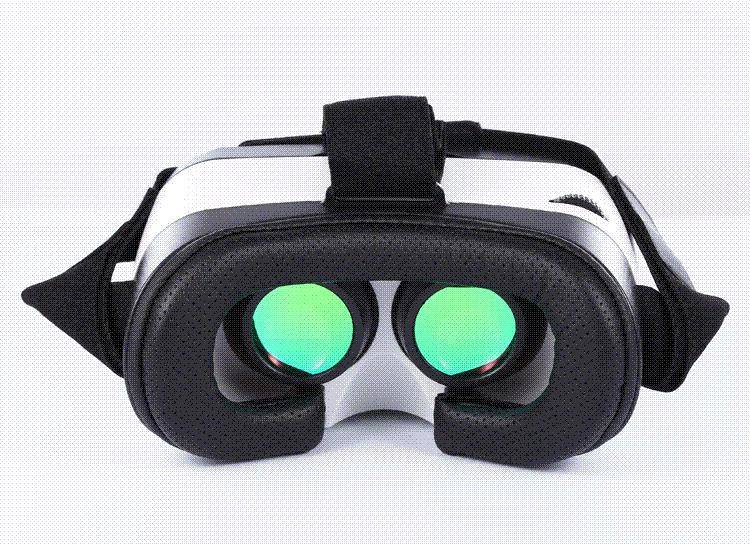
A virtual reality headset is a head-mounted device that provides virtual reality for the wearer. VR headsets are widely used with computer games but they are also used in other applications, including simulators and trainers. They comprise a stereoscopic head-mounted display (providing separate images for each eye), stereo sound, and head motion tracking sensors (which may include gyroscopes, accelerometers, structured light systems, etc.). Some VR headsets also have eye tracking sensors and gaming controllers.

Because virtual reality headsets stretch a single display across a wide field of view (up to 110 for some devices according to manufacturers), the magnification factor makes flaws in display technology much more apparent. One issue is the so-called screen-door effect, where the gaps between rows and columns of pixels become visible, kind of like looking through a screen door. This was especially noticeable in earlier prototypes and development kits, which had lower resolutions than the retail versions.

The lenses of the headset are responsible for mapping the up-close display to a wide field of view, while also providing a more comfortable distant point of focus. One challenge with this is providing consistency of focus: because eyes are free to turn within the headset, it’s important to avoid having to refocus to prevent eye strain.

Virtual reality headsets are being currently used as a means to train medical students for surgery. It allows them to perform essential procedures in a virtual, controlled environment. Students perform surgeries on virtual patients, which allows them to acquire the skills needed to perform surgeries on real patients. It also allows the students to revisit the surgeries from the perspective of the lead surgeon.
Traditionally, students had to participate in surgeries and often they would miss essential parts. Now, with the use of VR headsets, students can watch surgical procedures from the perspective of the lead surgeon without missing essential parts. Students can also pause, rewind, and fast forward surgeries. They also can perfect their techniques in a real-time simulation in a risk free environment.
Latency requirements
Virtual reality headsets have significantly higher requirements for latency the time it takes from a change in input to have a visual effect than ordinary video games. If the system is too sluggish to react to head movement, then it can cause the user to experience virtual reality sickness, a kind of motion sickness. According to a Valve engineer, the ideal latency would be 7-15 milliseconds. A major component of this latency is the refresh rate of the display, which has driven the adoption of displays with a refresh rate from 90 Hz (Oculus Rift and HTC Vive) to 120 Hz (PlayStation VR).
The graphics processing unit (GPU) also needs to be more powerful to render frames more frequently. Oculus cited the limited processing power of Xbox One and PlayStation 4 as the reason why they are targeting the PC gaming market with their first devices.

Asynchronous reprojection /time warp
A common way to reduce the perceived latency or compensate for a lower frame rate, is to take an (older) rendered frame and morph it according to the most recent head tracking data just before presenting the image on the screens. This is called asynchronous reprojection or “asynchronous time warp” in Oculus jargon.

PlayStation VR synthesizes “in-between frames” in such manner, so games that render at 60 fps natively result in 120 updates per second. SteamVR (HTC Vive) will also use “interleaved reprojection” for games that cannot keep up with its 90 Hz refresh rate, dropping down to 45 fps.

The simplest technique is applying only projection transformation to the images for each eye (simulating rotation of the eye). The downsides are that this approach cannot take into account the translation (changes in position) of the head. And the rotation can only happen around the axis of the eyeball, instead of the neck, which is the true axis for head rotation. When applied multiple times to a single frame, this causes “positional judder”, because position is not updated with every frame.

A more complex technique is positional time warp, which uses pixel depth information from the Z-buffer to morph the scene into a different perspective. This produces other artifacts because it has no information about faces that are hidden due to occlusion and cannot compensate for position-dependent effects like reflectons and specular lighting. While it gets rid of the positional judder, judder still presents itself in animations, as timewarped frames are effectively frozen.

WHAT IS AUGMENTED REALITY

Augmented Reality was first achieved, to some extent, by a cinematographer called Morton Heilig in 1957. He invented the Sensorama which delivered visuals, sounds, vibration and smell to the viewer. Of course, it wasnt computer controlled but it was the first example of an attempt at adding additional data to an experience. Wikipedia describes?Augmented Reality ?as a live direct or indirect view of a physical, real-world environment whose elements are Augmented” by computer-generated or extracted real-world sensory input such as sound, video, graphics or GPS data.

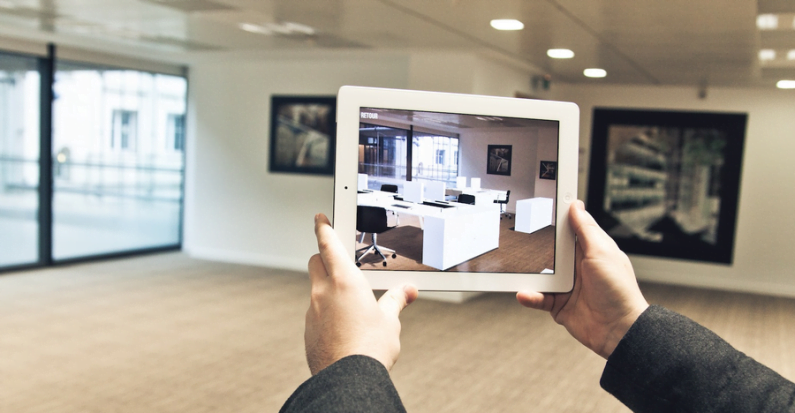
Augmented reality is actually in simple words can be explained as adding some content in the real world which is actually not present there. Augmented reality is actually creating or adding a virtual world/ things over a real world. It brings 3D content to your eyes in the real world by using any medium like phone camera or web cams.

The first properly functioning AR system was probably the one developed at USAF Armstrongs Research Lab by Louis Rosenberg in 1992. This was called Virtual Fixtures and was an incredibly complex robotic system which was designed to compensate for the lack of high-speed 3D graphics processing power in the early 90s. It enabled the overlay of sensory information on a workspace to improve human productivity.

The best and most relevant example of app popularly known as Pokmon Go. Those who have played that that game knows what that game is. That game is actually creates virtual characters augmented in the actual world. The basic concept of that game is to catch pokmon as you open the app you see a different world in the same world. It just takes the real world as a base and shows augmented /virtual reality effects.

There are some popular apps other than Pokmon go if you want to take some good experience of virtual reality

  1. Ink hunter
  2. Augment
  3. Holo
  4. Sun Seeker
  5. Aurasma
  6. Quiver


Use of augmented reality can be done in different fields of study and practical use as:

  1. Education

AR would also be a way for parents and teachers to achieve their goals for modern education, which might include providing a more individualized and flexible learning, making closer connections between what is taught at school and the real world, and helping students to become more engaged in their own learning.

  1. Medical

AR provides surgeons with patient monitoring data in the style of a fighter pilot’s heads-up display, and allows patient imaging records, including functional videos, to be accessed and overlaid.

  1. Military

In combat, AR can serve as a networked communication system that renders useful battlefield data onto a soldier’s goggles in real time. Virtual maps and 360 view camera imaging can also be rendered to aid a soldier’s navigation and battlefield perspective, and this can be transmitted to military leaders at a remote command center from the soldier’s viewpoint, people and various objects can be marked with special indicators to warn of potential dangers.

  1. Video Games

A number of games were developed like Pokmon go and others. The gaming industry embraced AR technology in the best way possible for normal people.

And Much more

Future of Augmented?Reality

Experts predict the AR market could be worth 122 billion by 2024. So this report by BBC tells us that augmented reality has very big market as the development goes on and on.

Request a Free Estimate
Enter Your Information below and we will get back to you with an estimate within few hours
0